Skip to content

Engine and Uncertainty

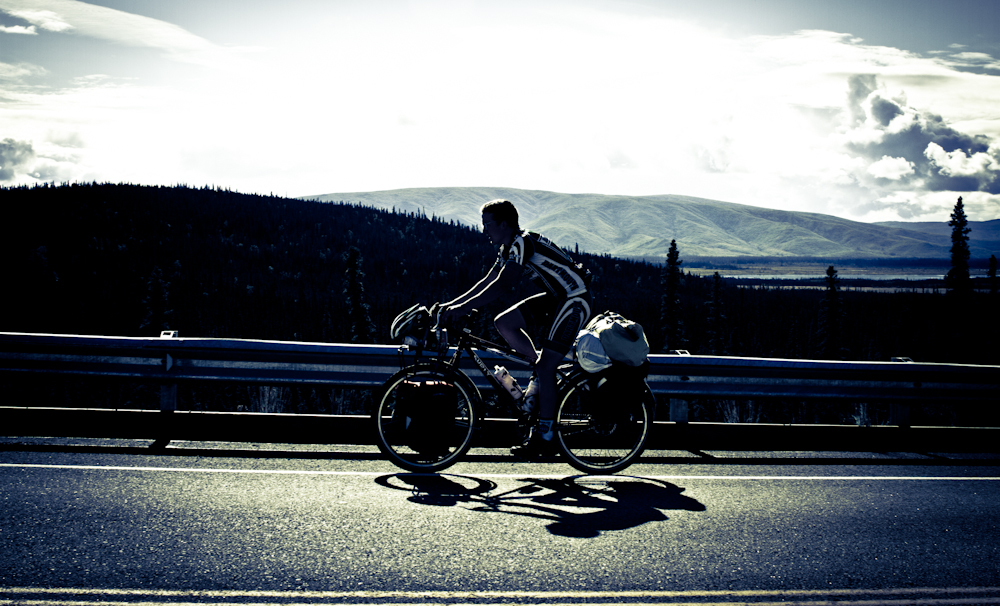
The_beauty_of a bicycle is also its vulnerability.  The beauty is that uncanny resemblance to flight, the nirvana of a smooth ride on an open road with the power of the human body and nothing more.  The bicycle’s humanity is its vulnerability to the frailty of the body and legs.  We are always at the mercy of winds and storms and the metal cages that whir past us every day.  Ghosts in a tired shell, our bodies need rest but sometimes even that isn’t enough.  The engine of the body breaks.  Back in Oregon I reflected that much of our mental space while riding is occupied by listening to our bodies.  Hunger, thirst, exhaustion, strength, health, and motivation all move across our minds as we ride.  We’ve been listening to the inputs since Alaska and one might think we’re experts at this point.  Hubris had me thinking I was an expert a few weeks ago.  There is no such thing, as the body is a fickle and complicated thing.  For the second time in the trip we’re battling engine failure: illness.
2000 vertical foot sunrise hike to see butterflies? Why not!

The first time was in Alaska.  Within a few days of leaving Anchorage, we were three rookies with a couple hundred miles in our legs and the Denali Highway and Alaska Range ahead of us.  Tendonitis appeared in my Achilles and in the knees of my brothers with terrific inflammation and pain during our rides.  We could have expected it considering how few miles we had on our touring bicycles before we left for Alaska.  Nathan clearly had the worst of it.  Outside of Tok, AK, the pain was so great that Nathan could barely crawl at 8mph and was unable to match our 80-mile-a-day pace.  Nathan rode in the back of a Californian’s RV to Whitehorse so that he could rest his knee and recover while David and I pressed on alone.  Without healing, Nathan could not continue, and I do not know what we would have done without him.  This was a very difficult time for us so early in our expedition.  We didn’t share our fears outside of our family.
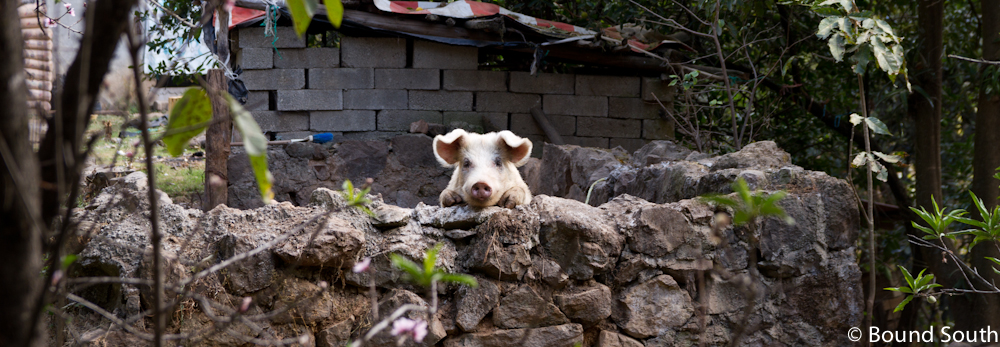
Family pig takes a break in the pool from the afternoon sun.

After some extended rest with retired Catholic priests in Whitehorse, we pressed onwards through the Yukon.  Tendonitis disappeared.  We were tentatively thrilled with the miraculous recovery we experienced.  Nathan felt like he was riding gingerly for weeks, reveling in the pain-free riding but aware of how serious the condition would be if it returned.  We put all of that stress behind us once we reached the States and since then our bodies have felt like unstoppable, finely tuned riding machines.
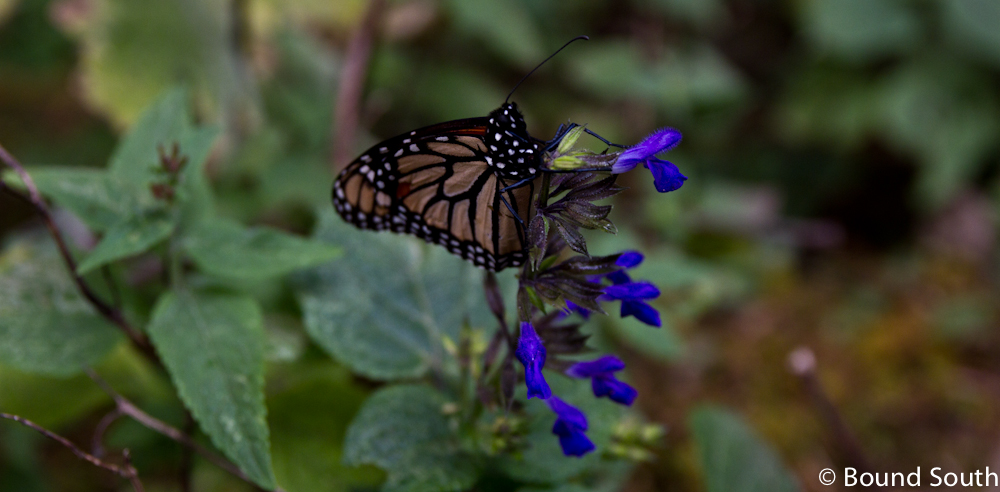
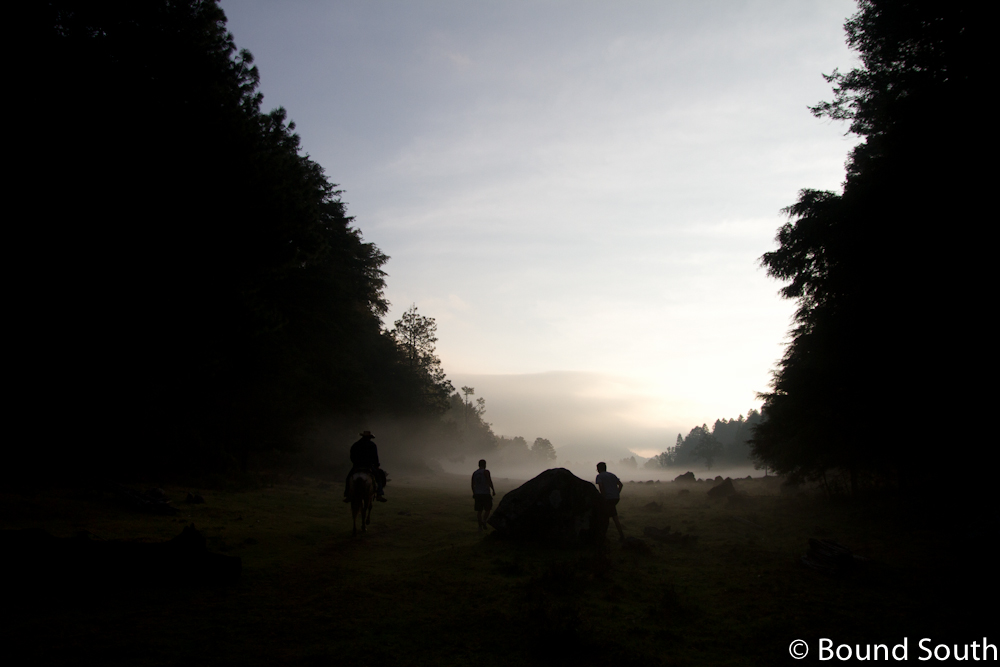
We awoke before dawn to hike a mountain and see thousands of monarchs.

All it takes is a bout of illness to bring you back down to earth.  A head cold and ear infection derailed some of my more ambitious plans for the Central Highlands, costing us a few days of rest in Patzcuaro.  Now in Valle de Bravo, David and Nathan have encountered consecutive bouts of flu-like symptoms and food poisoning.  It has been an unfortunate distraction from the unforgettable memories of the Mexican Highlands.  This illness has no rhyme or reason, no apparent cause, nor any clear course of action.  All you can do it eat well and sleep and pray it is better tomorrow.  It is a powerful lesson in serenity.  Argentine winter is already beckoning to us as we hurtle towards the month of May.  We have a lot of hard miles ahead of us, especially in the high Andes.  Having lost nearly two weeks in the last month now to illness I fear for what else we may encounter between here and Ushuaia.  It is not in our hands in the end.  When we are well we will ride; this is all we can do, and it must be sufficient to cross these many small worlds leading to Argentina.
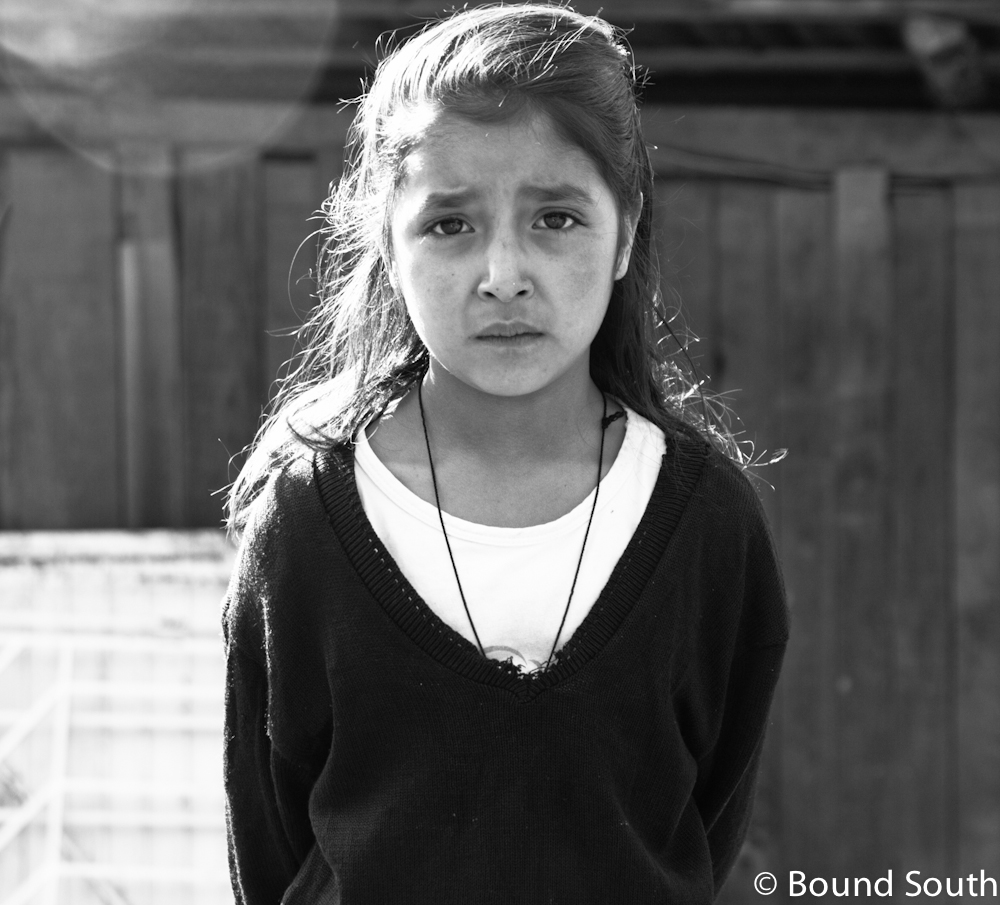
24 Hours

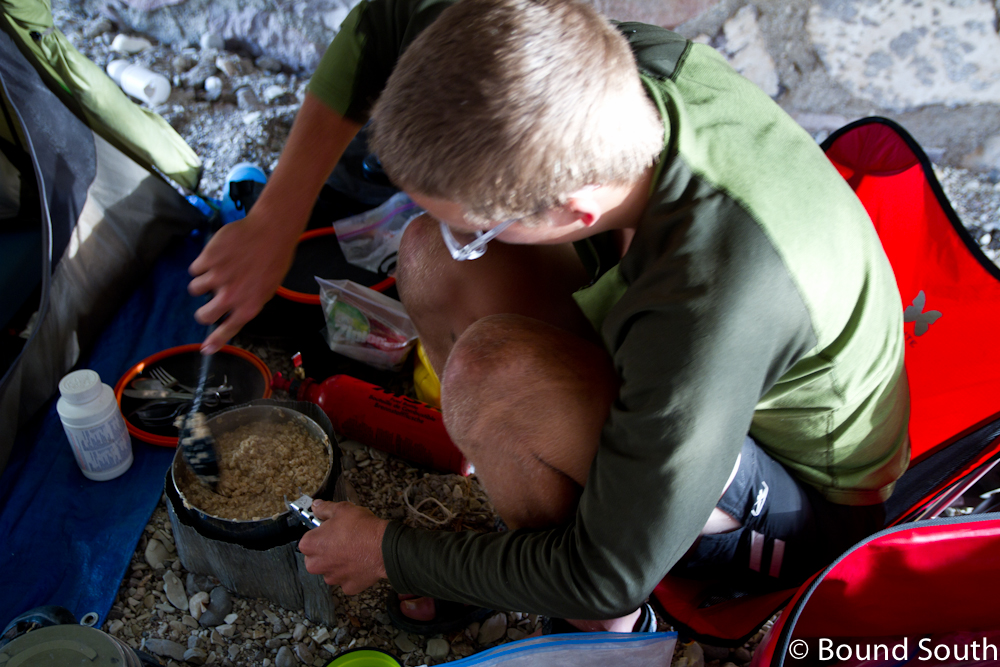
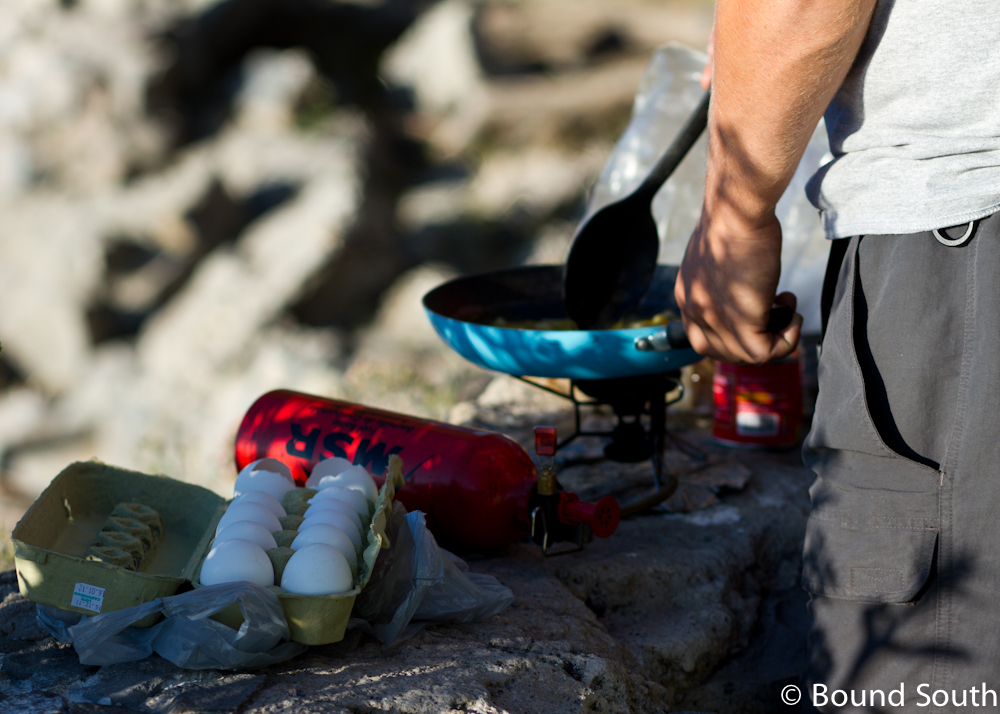
The_sun_ushers a green glow to the inside of our tent with the warmth in its wake.  At 7:xx the alarm rings a tone that one of us rustles out of our sleeping bag to silence.  Time to cue the music and our morning rituals.  Isaiah and I are usually the first to get up and out of our beds.  He who shall not be named continues to sleep or sits up to resume where he left off in his book, until breakfast is served.  A concoction of oatmeal, sugar, and granola has been the backbone of the trip, although we’ve been experimenting with scrambled eggs and vegetables.  We finish eating in about fifteen minutes.  Isaiah packs up the stove and food supplies while David and I work on our sleeping bags and air mattresses.  Once the tent is cleaned out we tear the tent down, pack the remaining things into our panniers and change into our riding clothes.  The morning reveals our respective moods, ranging from grumpiness to sassiness and smiles and sarcasm.  Mood is strongly affected by quality of sleep, difficulty of riding, and how tasty our oatmeal was relative to the 136 other times we have had it on Bound South.

Breakfast of Champions

Our new frying pan adds some variety to morning meals

The first few hours of riding go by quickly.  Our legs are fresh, leaving our minds wander as we dance with the white line. Snacks are consumed hourly to offset calories we burn riding at such awe-inspiring speeds.  Shopping for snacks has been simplified by the use of a convenient formula: Cost per Calorie per Gram per Unit of Volume.  Typically the tried and true Bound South snacks are Oreos, Poptarts, vanilla wafers and assorted Candy Bars.  Obviously the healthiness of the food isn’t a big factor since we are merely looking for quick energy.

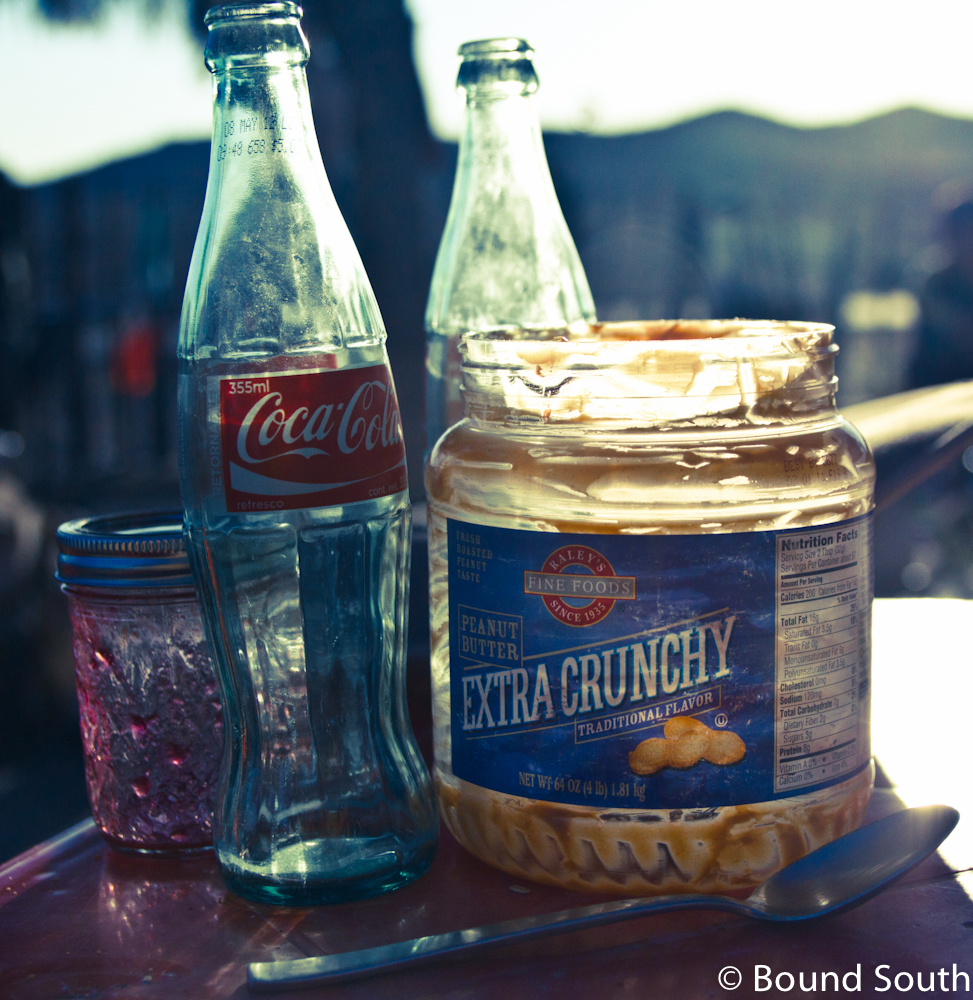
Perfect lunch combo

A European lunch break helps to break up the day of riding and decompress, when we have the time for it. Since we’ve hit Mexico our lunch break has changed in a few ways. A place to sit in the shade has always been an integral factor, but Coca-Cola has become the focal point of our noon hour.  Oxxo and Pemex (convenience stores and gas stations, respectively) have become our oases in Mexico.  With a 2-3L bottle of Coke and a spot to sit indoors we are satisfied and ready for grub. We’ve converted to tortillas from bread, using them for both lunch and supper.  Peanut butter is becoming more expensive and harder to find, but still worth it in every regard.  Peanut butter-honey-granola tacos are keeping us fueled for lunch, if we aren’t taking advantage of cheap street food.  Meals have been supplemented with fruits and vegetables that are becoming incredibly cheap as we continue south.  After an hour of eating we overcome our lethargy from the food and sore muscles and resume our voyage, newly christened with Coke.

Following lunch, our schedule returns to snack breaks, map checks, and glances at the sun to keep us heading south.  With thirty minutes till sunset we begin to keep an eye out for a campsite.  Camping in the desert was simpler when we had the choice of pulling of the road anywhere to camp. Lately the land next to the highway has been fenced off, forcing us to be more creative.  Often times we find a secluded spot on a quiet side road, or we meet someone with a good suggestion or a nice lawn.  We have found people to be very kind, happy to offer their yard and occasionally well-received food. Warning: Don’t camp next to or near a chicken coop.

A tree belt between corn fields provided a stealthy spot for the night

Once we find a flat spot and put the tent up, we gather cooking supplies from our packs to prepare for supper.  Since groceries have been so cheap we’ve been eating like kings.  Our meals are comprised of peppers, potatoes, tomatoes, onions, beans, rice and some type of canned meat.  Teamwork comes into play to get everything sliced, portioned out, and into the pot to cook.  Two of us work on the ingredients while the other continually stirring to keep the bottom from burning.  Gasoline burns significantly hotter than premium camp fuel, but it is cheap and easier to find.  When the rice softens up we serve out the mixture of ingredients.  After frenzy of flailing silverware and tortillas, something resembling the calm after a storm occurs.  With five months of experience eating supper in this fashion, I apologize to anyone that has bought us supper and didn’t have a typical dinner conversation till our plates were clean.

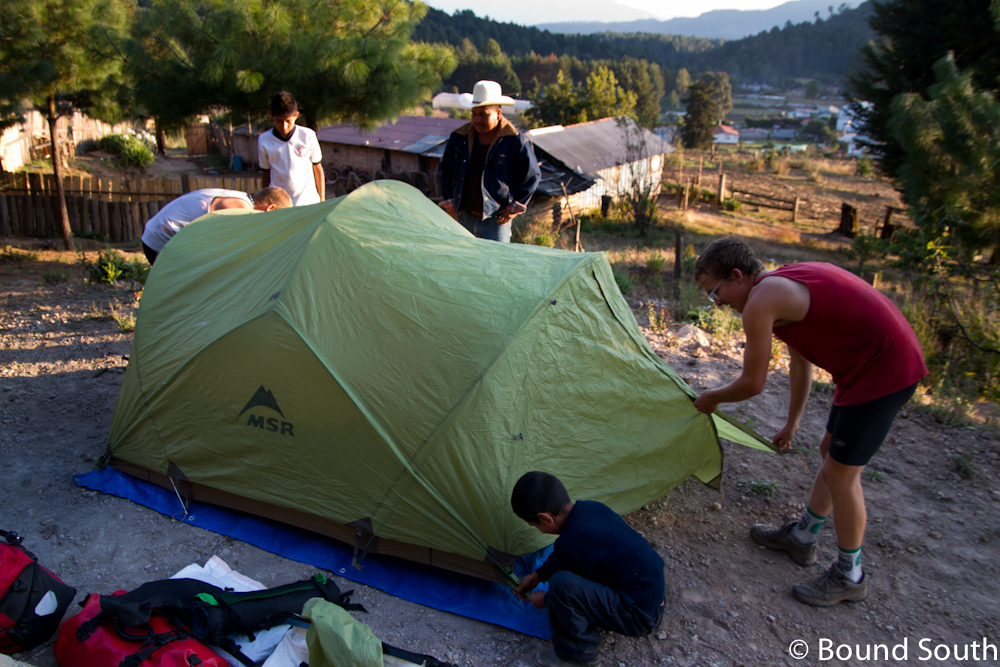
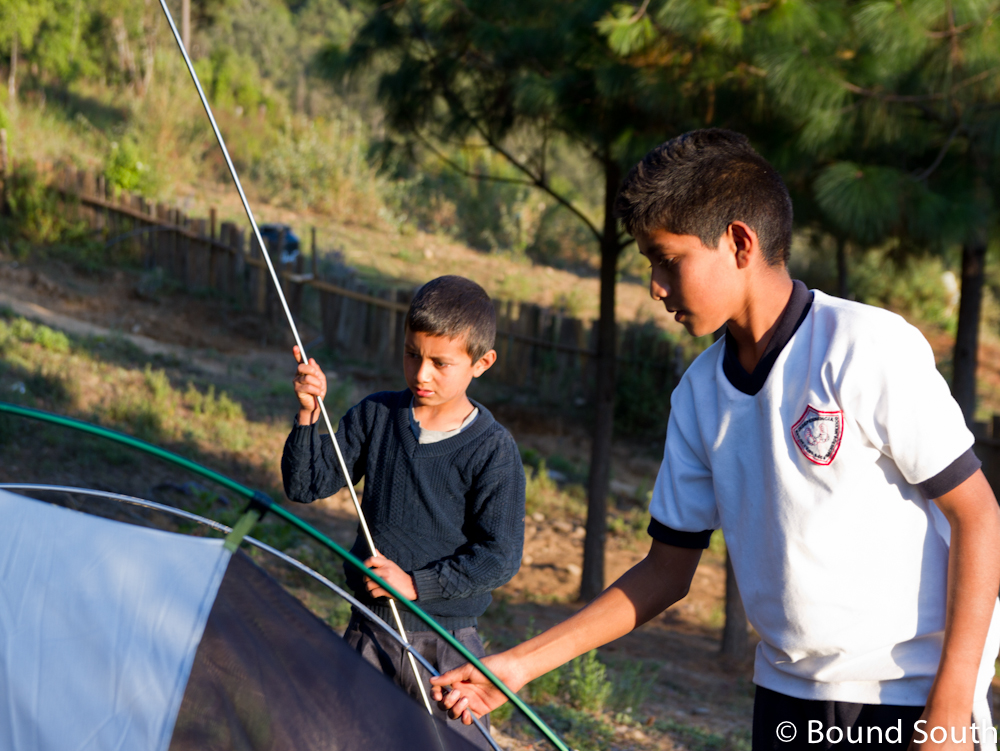
Our host's sons assisted us with tent duties

They were fascinated at the construction and happy to help

Sleep prep begins with inflating our air mattresses, brushing our teeth, and gathering any extra clothes we might need for a cold night.  The tent turns into a mosh pit as we all pile in and start to massage and stretch muscles, exercise, and read.  At some point things settle down.  Once our sleepiness causes the nooks to fall from our hands and hit us in the face it is usually time to call it quits for the night.  We all have a tendency to talk in our sleep, occasionally waking ourselves telling poorly received jokes or delivering impassioned speeches to cruise ships in our dreams.  This dialogue might be our best security for thieves in the night.  Ten hours of sleep is a good number for us until we wake the next morning and start another day all over again.

Our host provided artificial and natural light for our evening responsibilities. His sons huddled around the campfire as we prepared dinner and a sharpened branch (used as a stake), electrical cord, and lightbulb made this light pole possible.

Leaving a campsite feels like leaving an apartment, looking back you pause to see the barren potential of the space.  What is left behind is a haven that gave us a place to be out of sight (tenting under a bridge), exposed us to extreme unexpected weather (desert windstorms in the night), or introduced a new career possibility (bicycle goat herding).  Looking ahead to the next evening there is an exciting sense of uncertainty, something like a crab must feel scurrying to a better conch under the open sky–except we worry about trucks rather than gulls.  There’s a give and take with each new home. We take the time to convert a rocky patch in the desert or a family’s courtyard into a temporary home.  Upon departure we take a piece of it with us; a lesson learned on tenting 101 or fond memories from teaching a new game to nearby children.

Isaiah and Angus made a great goat-herding team

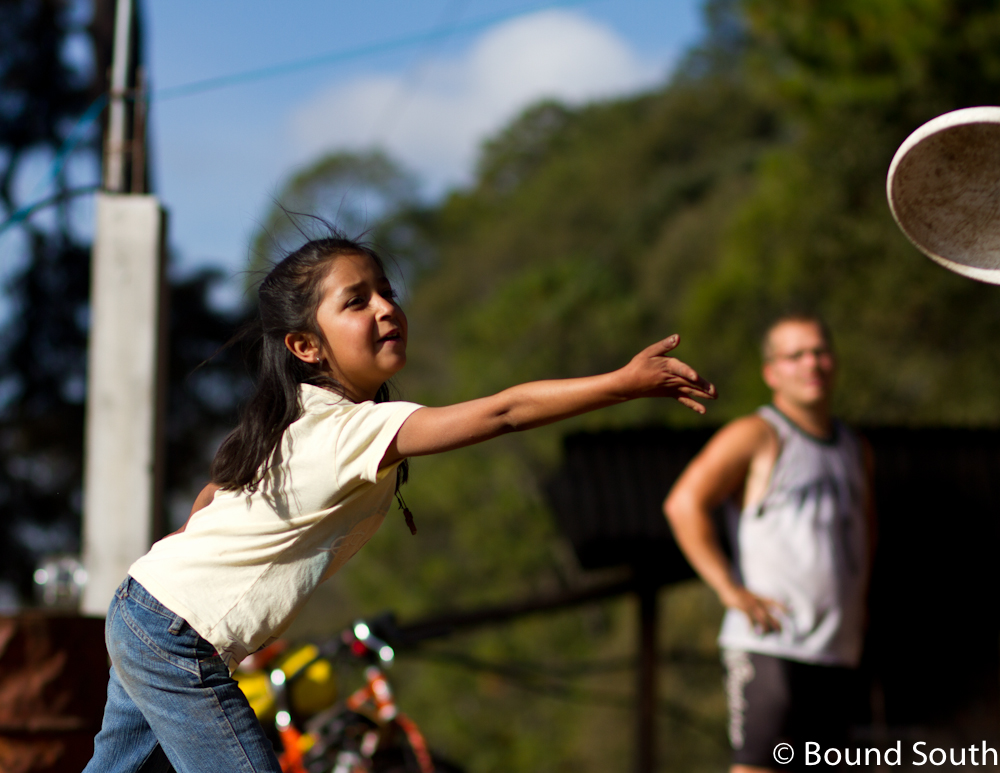
Children love to join in the frisbee fun

Mailbag Monday #7

Today_we_continue our Mailbag Monday series…

Dear David,

Hi my name is Delons.  I am 10 years old and I in 4th grade.  I was wondering do you ever get tired.  Do you ever miss home?  Are you excited to go to new places?

Sincerely,

Delons

Pyramids behind, looking out over Lake Patzcuaro with our host, Bruno

Dear Delons,

Great to hear from you!  I do get tired.  We all do.  Abundant food and rest usually rejuvenates my energy store and alleviates my sore muscles.  Sometimes that isn’t enough, however.  I recently became afflicted with some food poisoning (prime suspect: beef tacos from a few days) and it takes much more rest and some medicine to feel well again.

I do miss home and times like this cause me to miss home the most; a comfy bed and a mother’s love always seem to be the best remedy when fighting illness.  While home and a North Dakota summer often occupy my mind, I always look forward to what is ahead.  Here in Mexico, we have met incredible people and families, seen volcanoes, pyramids, and butterfly sanctuaries, and experienced an entirely new culture.  No matter how nauseous I feel, my appetite and thirst for the road ahead is always perked when I think about lies ahead.

Thanks for your message!  We are currently staying with a family in Valle de Bravo.  By tomorrow, I should be well and ready to hit the road!

Sincerely,

David

Gear: Rohloff

Our_Surly_bicycles attract a lot of attention, which can be attributed to both their “Agent Orange” paintjobs, the brightly colored Ortlieb bags that hang from them, and the gringos riding them.  A while ago we struck up a conversation with an employee of a grocery store who was moving carts in the parking lot.  He noticed our bicycles and asked about them.  At one point I was describing how protective we were of our steeds.  “These bicycles are our lives for a year.”  And it is true.

Campagnolo 39t road racing crank on the front. Italian. Mmmm.

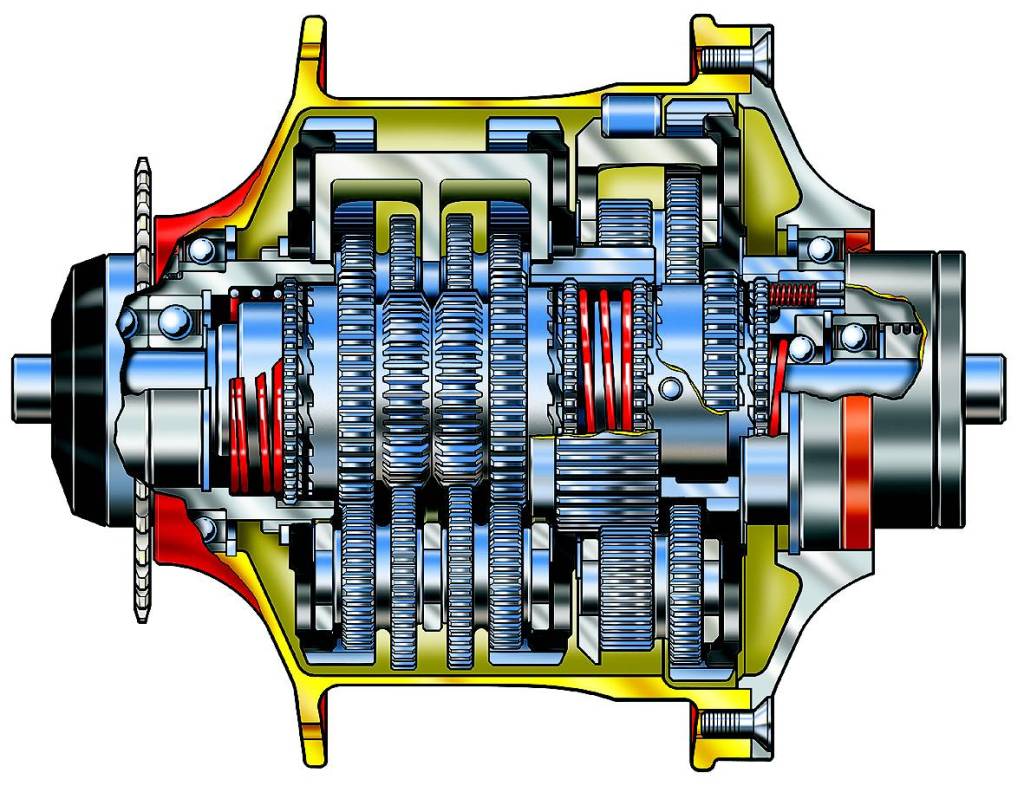
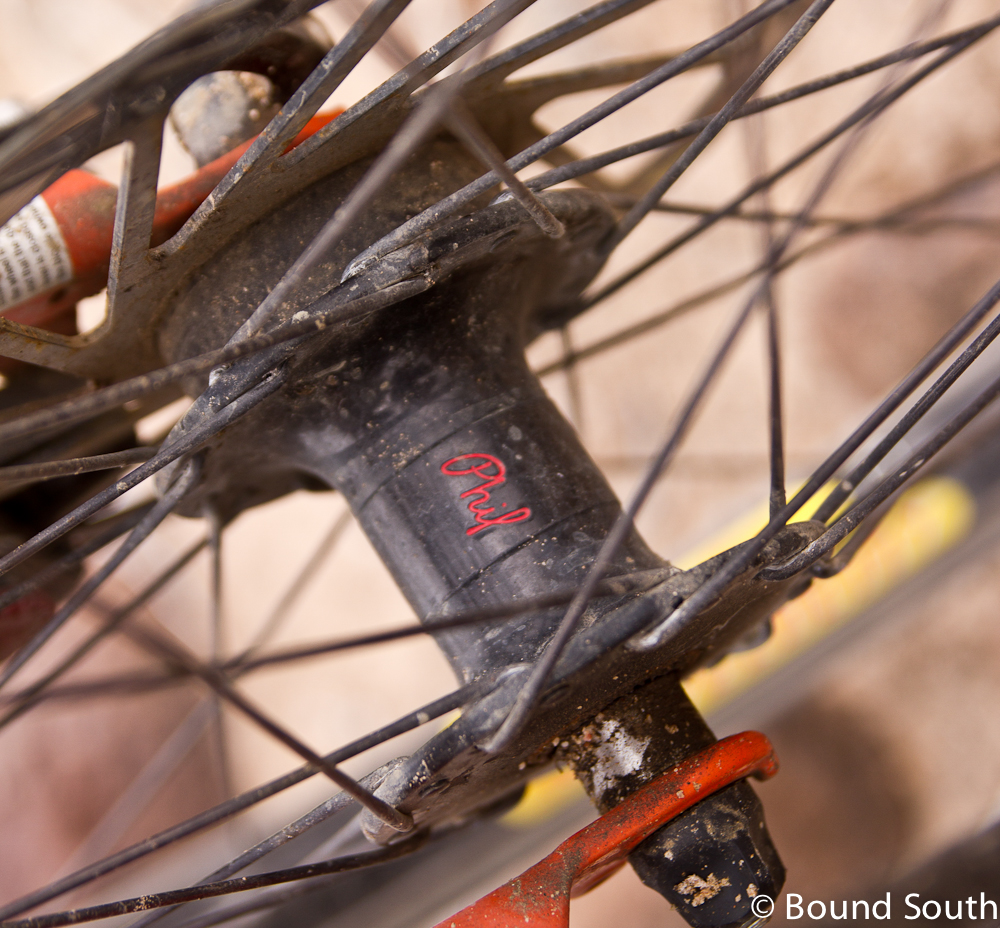
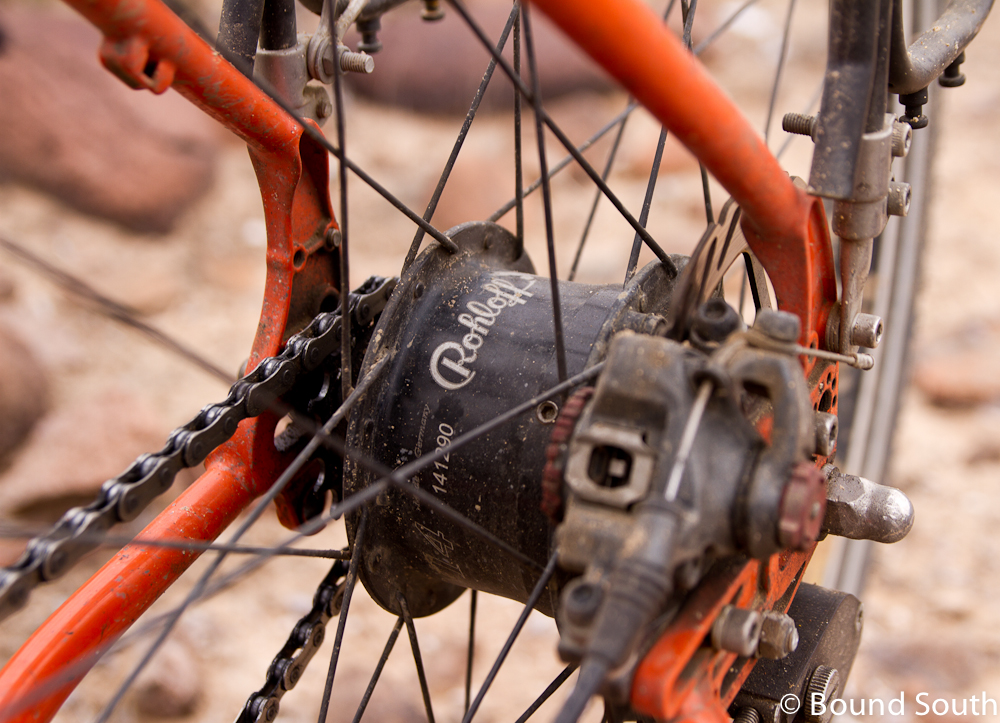
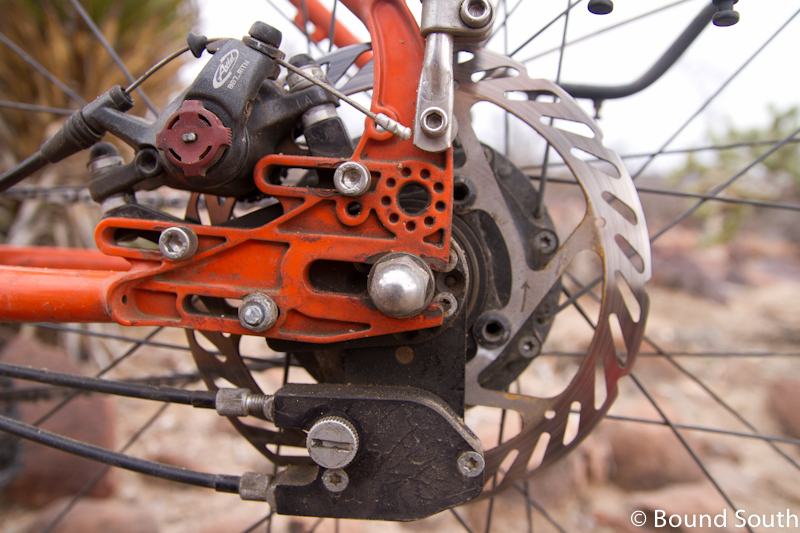
Our wheels get a lot of attention as well, mainly because at first glance they appear like single-speed bicycle wheels.  Once you look closer, however, you notice the cable housings for the shifting mechanism and the oversized rear hub.  Enter the magic of the Rohloff: 14 speeds in an internally geared hub.  These German Schätzchen of ours get the job done, transporting us and our gear reliably, smoothly, durably, and as fast as our legs can handle.  Neil at Cycle Monkey took care of our Rohloff wheel build in California, assembling purpose-built wheels for our rugged expedition touring.  The Rohloff disc-compatible rear hub was paired with a Phil Wood disc-compatible hub on the front wheel, all laced with 32 strong spokes to Velocity’s Cliffhanger rims.

German engineering at its finest.

Let me indulge my inner bicycle nerd and explain to you what I love about these wheels.

  • Discs.  Disc brakes aren’t as sexy as rim brakes, but they work perfectly in all conditions.  They are strong.  The Avid BB7 brake pads last an eternity.  The rim experiences no wear from braking, and the bike stays cleaner.  Better yet, with the Troll, you can use disc brakes and fenders and racks simultaneously.
  • Maintenance.  Or rather, the lack thereof.  This stuff just works.  Our Rohloff runs a perfectly straight chainline from front chainring to rear cog.  Our Trolls have a strong, long-lasting chain that never has to be shifted.  We set the chain tension and oil/clean the chain every few days.  We change the oil of the Rohloff hub every 5,000 miles.  The chain and cog, like all good singlespeed combinations, last longer and stay cleaner and are cheaper to replace than conventional chains and cassettes.  After riding your bicycle all day, it is hard to describe what a luxury it is to not have to do any significant work on your bicycle.  It just works.
  • Performance.  Riding these wheels rocks.  The Rohloff has 14 evenly spaced gear ratios that enable us to crawl uphill with our heavy bags and fly down the other side of mountains without serious compromises.  The shifting always works, and with all of the indexing in the sealed rear hub, never has to be adjusted and only gets better with time.  A Rohloff is hub is a portly replacement for conventional derailleurs and other parts; but it’s worth its extra weight in gold.
  • Durability.  These wheels marry functionality to insane durability.  They pay a price in weight, to be sure; but on a Pan-American bicycle expedition there isn’t anyone counting the grams.  These wheels are very strong, such that we feel confident even on rocks, single-track, cobblestones, and dirt roads at speed.  The Rohloff has huge hub flanges laced symmetrically to the rear rim; the result is a wheel twice as strong as a traditional, off-set rear wheel even with extra spokes to compensate.   There are no derailleurs or guides to bend or fail.  Even if our cables were cut, the hub can be shifted manually with an allen wrench.  Velocity rims have a proven and well-deserved reputation for quality.
  • Simplicity.  The Germans put a bunch of complex engineering into a very simple final product.  A simple twist of the wrist is all it takes to shift up or down with perfect reliability.  There is one chain, one cog, and one chainring to worry about.  You can shift gears without pedaling, or while standing still.

    Beautiful and simple Phil Wood front ISO hub.

  • The best bicycle is the one you forget about as soon as you hop on.  Ideally there is nothing to distract from or diminish the ride.  That is how I feel about our wheels.  They aren’t cheap, but they just work.  I plan on enjoying the functionality, durability, simplicity, and craftsmanship of these wheels for the rest of my life.

Rohloff rear hub. Note the Troll's wondrous disc/rack/fender/Rohloff compatibility.

New Year, New World

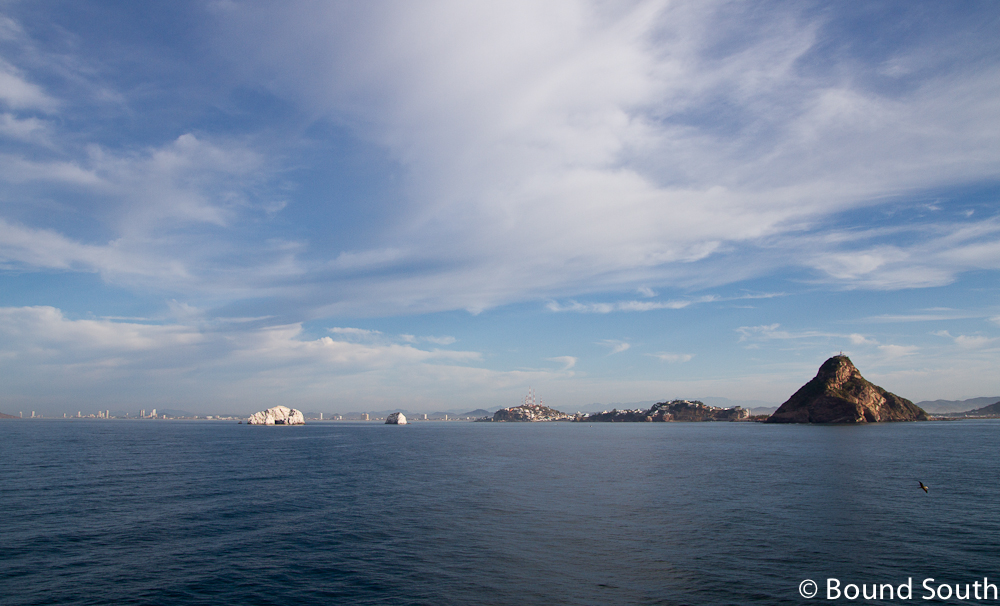
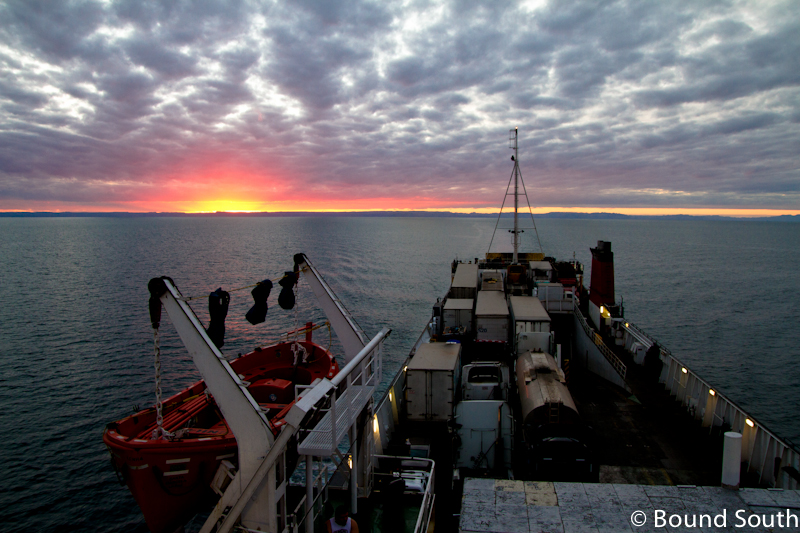
We_awoke_in_our tent to the gentle rocking of a cargo ferry with mainland Mexico and the port city of Mazatlan on the horizon.  Impossibly thick ropes soon flew from the ship to secure it to the numerous huge pylons anchored on shore.  Following dozens of big rigs and their sleepless drivers, many of whom had slept on the cold hallway floors of the ship the night before, we rode our bicycles off the ferry and into the gateway to mainland Mexico.  We stopped at an auto garage to ask for directions to the Malecon, the shorefront main street of many Mexican port cities where we were meeting a North Dakota connection.  After receiving directions and some words of caution, we were assured by the mechanic that Mazatlan was a “satanic jungle” and that he would pray for our safety as we traveled through.  Someone should put that on a billboard or something.

Mild confirmation bias is our saving grace.  It is certainly possible that Mazatlan was the most dangerous city we’ve seen yet in Mexico.  We’re not so sure.  Our hosts in the city did drive me by a restaurant that had been shot up by the local mob after it didn’t pay its protection money.  The traffic and people were far from menacing, though they may have been in more of a rush than those on the Baja.  We’ve received dire warnings from other Mexicans about Mazatlan, and when we got to Mazatlan we received dire warnings about the places we passed through to get there.  Were it not for a careful optimism on our parts, we would have never braved the border at Tijuana.  We continue to absorb as much information as we can, even if it does little to alter our route or our conscious optimism about the road ahead.  If Mom and Dad are reading this, don’t worry, we’ll totally consider hitch hiking or something if a Latin American civil war breaks out in 2012.

I miss home and our family a great deal, accustomed as I was to spending this season with them.  The New Year has us all reflecting on the past year, especially the way that countless families have taken us in and made us feel like one of their own.  The Catholic Diocese of Whitehorse, the Coopers of Coeur d’Alene, the Pfeiffers of Portland, the Samuels of Santa Monica, the Taylors of San Diego, and the Salazars of Guadalajara are just a few of these.  Thank you all for what you’ve done for us.


December has foreshadowed the rest of our journey in 2012.  We’ve climbed some tremendous mountains in Mexico’s western highlands, and we respect the toll that it takes on our bodies.  The Andes will only be bigger, more challenging, and more spectacular.  I’ve dealt with illness for the first time since leaving Anchorage.  A dreadful headache became a cold and ear infection; sadly, I’m still recovering and the illness has cost us some time and miles.  Rest and health can’t be compromised, and once I’m healthy we’ll be riding strong once again.

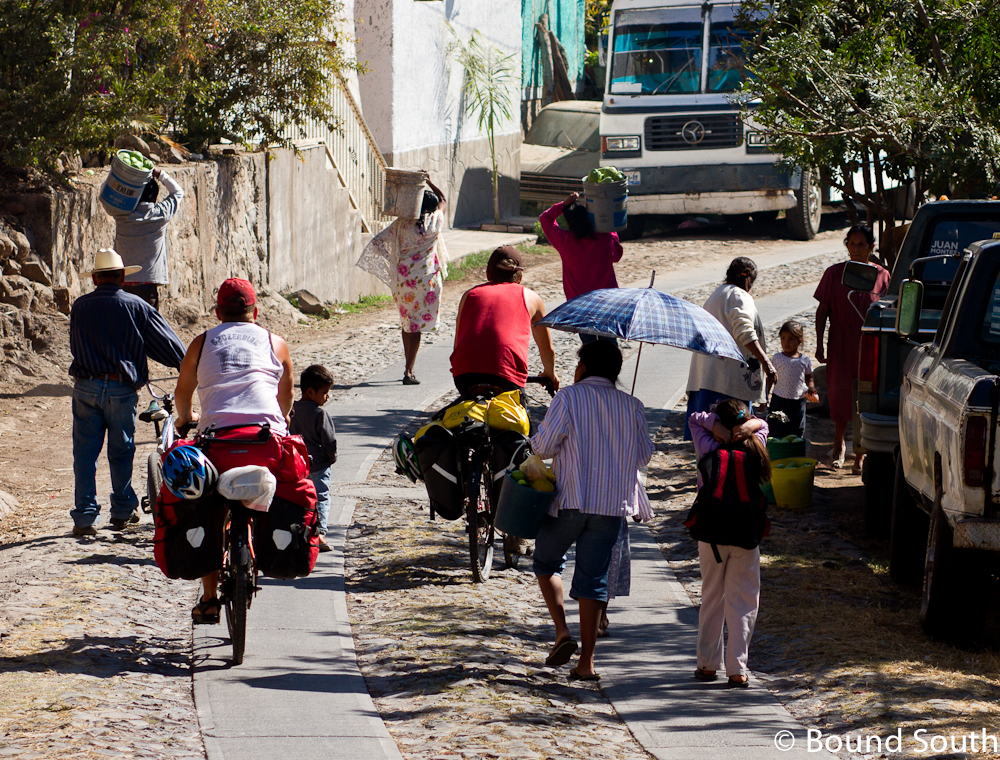
The human and geographical diversity of the mainland is incredible.  Megacities and rural farming villages and beautiful lakes and mountains rise up at every turn.  Most of North America, even the Baja, has been defined by the vast, empty natural landscapes between places.  This New World brims with life and a constant human presence.  Riding a few mornings ago beside Lake Chapala, we struggled up an impossibly steep cobblestone climb for seven kilometers.  Every turn had us greeting another farmer or laughing child or family with a breathless “Buenos Dias” and a smile through gritted teeth.  It’s almost as if we’ve been practicing piano in the family room since leaving Alaska, and finally we’ve reached our recital and constant audience in the new world of mainland Mexico.  Sometimes we’re self-conscious, but most of the time we’re smiling, inspired, and excited for our next opportunity to inspire a stranger’s day with our story.

Hemingway once recounted in a conversation with a friend, A.E. Hotchner, that “If you are lucky enough to have lived in Paris as a young man, then wherever you go for the rest of your life it stays with you, for Paris is a moveable feast.”  If there ever was a moveable feast, it is this bicycle expedition.  The sights and smells and sensations will linger and move with me long after we reach Ushuaia in Argentine winter.  In the meantime, I hope that you all find richness and love and a moveable feast of your own in 2012.

Highway One Diaries: Peace by the Sea

All_good_things_must come to an end, or so the saying goes.  Highway One and its stories ended for us in La Paz near the southern tip of Baja California.  Riding south along the Sea of Cortés and weaving back once more through the harsh deserts near Constitución made us anxious for the end of a long road stretching back to northern California.  Our time on Highway One ran out and so this marks the last Highway One Diary for Bound South.

Mountains abound in the Baja.

La Paz, “The Peace” by the sea, appeared on the horizon with no time to spare.  The desert was wearing on us.  Our last night before reaching the city we found ourselves on a desolate stretch of Highway One with little water, little food, no supplies within 40 kilometers, and worse yet, solid barbed wire fencing along each side of the highway.  Any good bicycle expedition depends on fortuitous gaps in the cattleman’s or farmer’s fence.  Through those gaps and into the wilderness we camp out of sight and leave in the morning, leaving nothing but tire tracks.  When no gaps exist, we are forced to get creative; which in this case meant sleeping under a bridge that hummed and grumbled over us with every passing vehicle.  Lest you get any romantic ideas about our brave campsite, it smelled like poop.

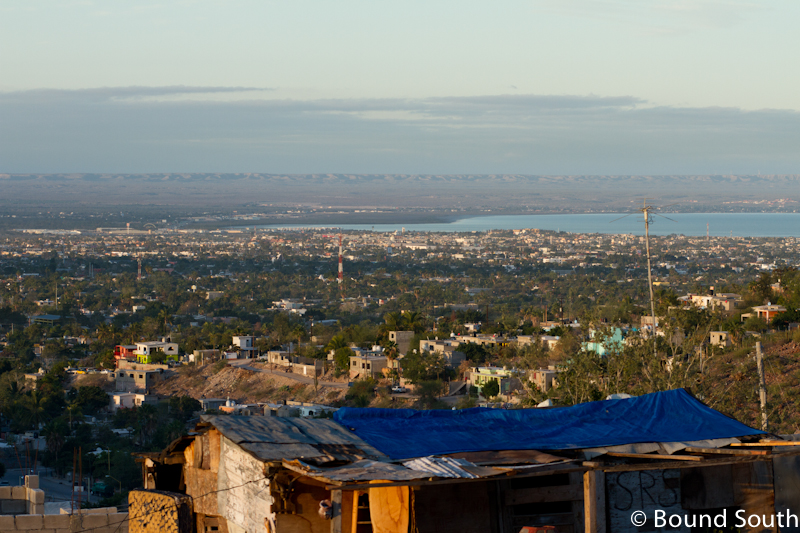
Looking over the city from the southern outskirts.

But then again, we probably did too.  Lots of time and sweat and effort finally got us to La Paz, where the generosity of a Canadian family and a local church community connected us with unparalleled goodness.  We stayed in tremendous luxury atop a hill overlooking the marina and its waterfront illuminated by city lights at night.  David ran through a hellish college application gauntlet.  Nathan ate absurd amounts of fresh fish tacos.  I got to see my girlfriend.  We spent some time by the ocean and the sights and sounds and smells of an authentic, working Mexican city.  We went to church.  We kayaked through a pack of jumping dolphins.  We volunteered to help serve breakfast to numerous children in one of the poorer colonias on the outskirts of La Paz.  One night, we ended up in a very questionable Mexican bar.

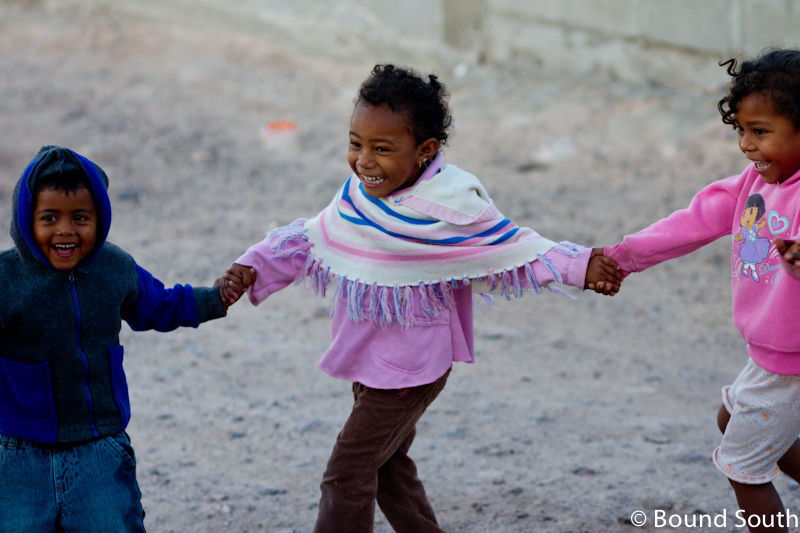
Children learned my favorite game from Dartmouth's DOC Trips.

The magic passes by quickly, but the memories stay and sustain us as we ride further.  La Paz was monumental for us; it was a kind of natural checkpoint, Nature’s confirmation that we’d done a pretty fine job of bicycle riding, and that it was time to ride a ferry across the sea.  It felt like luxury, but perhaps the goodness and wonders of strangers and new lands is instead a necessity we all go without too often.  Having repaired our bicycles, said our good-byes, and relished our last days of rest, we rode our bicycles over mountainous roads to Pichilingue where a Transportacion Maritima de California cargo ferry took us overnight to Mazatlán and the mainland of Mexico.  This good thing, Highway One, has come to an end; yet the road and its people and its landscapes wait for us should we ever have the privilege to return to it once again.

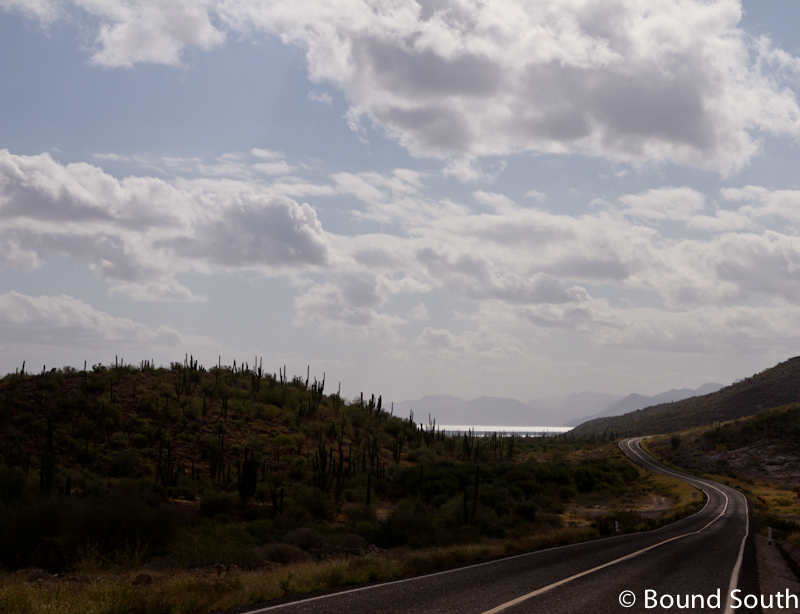
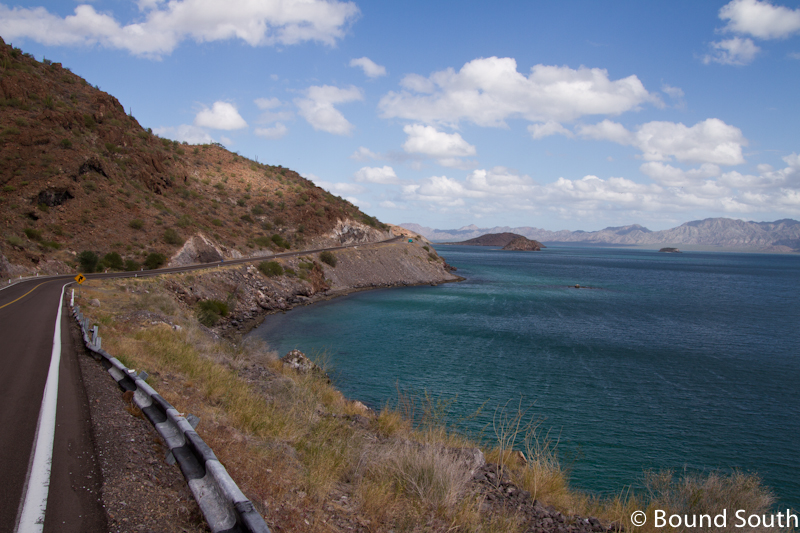
Portions of Highway One along the Sea of Cortés make California jealous.

Our cargo ferry across the sea to Mazatlan. We slept on the deck in our tent.

Mailbag Monday #6

Today_we_continue our Mailbag Monday series…

Dear Nathan,

How are you?  I am good.  I have a walking brace on.  I had an infection.  Will you send back?  I hope so!  I love dogs!  What is your favorite animal?  I like all animals.  Are you having fun?  I hope you are!  Do you ride 100 miles a day?  Well, I can walk 1/2 mile already.  That is to my mailbox and back!  Well, have a safe trip!

Your friend,

Elle

Mountains on the mainland

Dear Elle,

I’m doing pretty well, just had a hard day biking mostly up hill yesterday and my legs are a little stiff. My brother had to wear a walking brace for a while after he hurt his back in a soccer injury.  Glad to hear that you don’t mind having a brace on for the time being. We have two dogs back home that I miss from time to time, and I don’t dare strapping a dog to my bike rack to replace them.

I’m having an amazing journey so far, but I wouldn’t mind some cooler weather. Some of the long mountain climbs in the Mexican heat can get to you. The other day we had a climb that went on for thirty or forty minutes in the sun. We haven’t done a hundred mile day since we were in the states. We tend to average around 75 miles a day, the effort varies with the terrain. That’s a long walk to the mailbox! I bet you bring your dog on those adventures. Thanks for the letter!

Your friend,

Nathan

Merry Christmas

Guadalajara_and_North Dakota are worlds apart.  Today the distance shrinks.  In Mexico and at home, love abounds, family is primary, and somehow snow is nowhere to be found.  May you all find joy and love with your family this Christmas Day and reflect on that rare blessing that you possess in the company of your loved ones.  Merry Christmas!

Angus dressed for work in his festive Mexican Christmas attire.

A Guadalajara Christmas with the Salazar Family.

La Roca

We_met_Daniel in Las Palomes, a desert oasis in the Baja.  While chowing down on our peanut butter and jelly tortillas, he walked up to us, bags of crab in hand, hoping to make a sale.  We declined his product, but he persisted.  He spoke some English, so it was a good opportunity for both parties to practice each other’s language.  After explaining our background, cause, and plans for the Baja, he became ecstatic.  We had been planning to rest in Santa Rosalia, and he had just the right place for us to stay: La Roca, or The Rock in English.

Volcano in the distance

Two days later, after climbing between massive volcanoes, we descended into Santa Rosalia, a vibrant city nestled alongside the Sea of Cortez.  We knew that La Roca existed and that it was a Christian center, which proved to be enough.  Directions to La Roca led us to the outskirts of town, where we found solitude in the desert, fellowship among brothers, and a rock to rest upon.

The descent from volcano to sea

La Roca is a Christian Rehabilitation Center.  It is where men of all ages seek a second chance, new direction, and a place to call home.  Admitted men spend three months at the center performing manual labor and reflections, while also reading the Bible and relevant guidebooks.  They attend church twice a week, once at the center and again in the city.  We arrived just before the church service in the city.

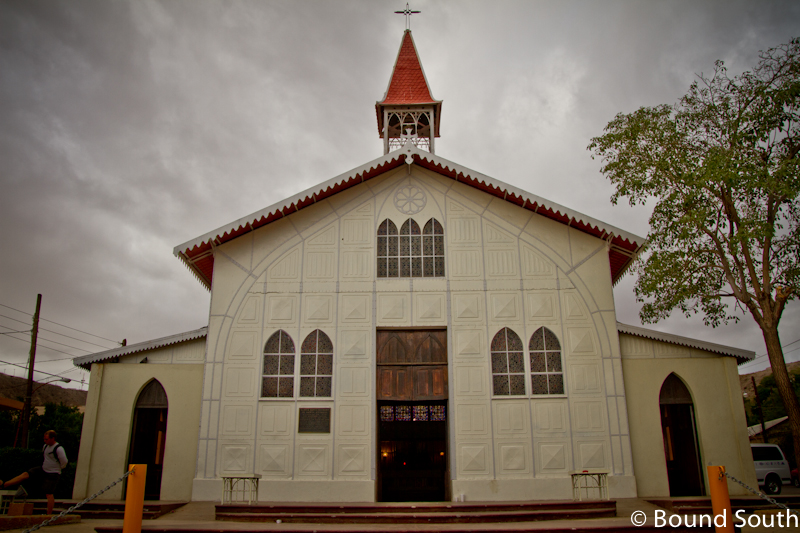
This metal church in Santa Rosalia was designed by Gustave Eiffel, the Eiffel Tower's architect

Before long, we were crowded into a minivan headed for the city with three twenty-something’s.  Sitting three across on both front and rear bench seats, we made introductions.  They struck us as an edgy, fun and purposeful group of guys.  Though they spoke little English, we immediately found camaraderie with them.  Language barriers ceased to exist.  It was refreshing.

Soccer match in session in Santa Rosalia

The service was unusual for us (or maybe bizarre by our Lutheran standards). Hours of contemporary Spanish songs and booming sermons filled our ears.  Plus, a majority of the service was spent standing. Add a long day of riding (and our early bedtime) and you have three exhausted gringos.  We survived, and soon returned to La Roca, where we were introduced to our sleeping quarters.

These two boys walked cheerfully up and down this hill endlessly.

Like so many summers at Park River Bible Camp, the early bird gets the worm, or in this case, the bottom bunk.  As latecomers we had the privilege to sleep in a three creaky top bunks in the bunkhouse with the men from the camp.  Snores abound with ten men in tight quarters, but that was no matter for a few weary cyclists.  We were sound asleep in no time.

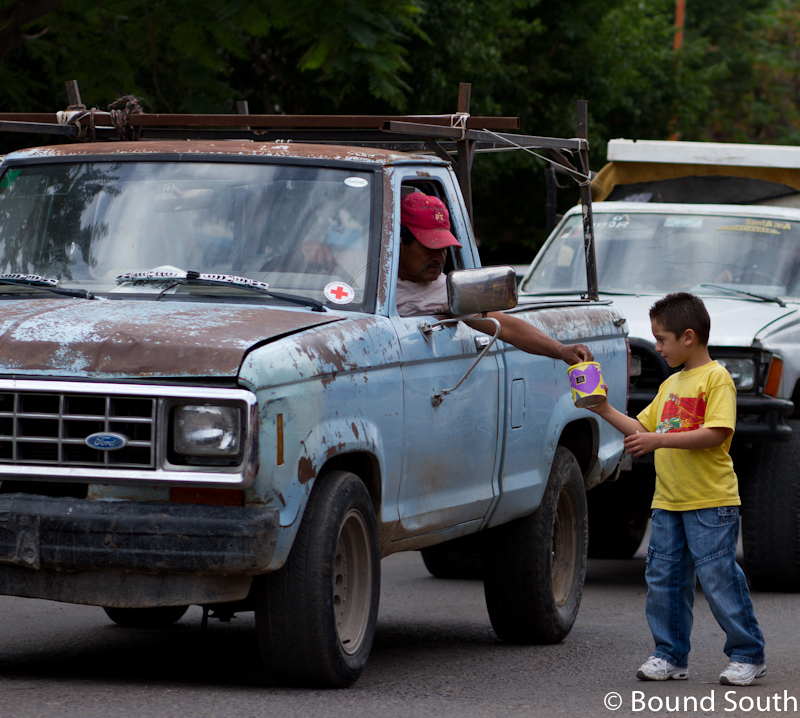
Schoolchildren collected Red Cross donations at this busy intersection all day.

The next day brought forth a delicious group breakfast, chores around the center, and a trip to Santa Rosalia, where we walked the town and found a restaurant with Wi-Fi.  I discovered an ardor for street photography and spent a large part of the day talking with locals and capturing life in the city (I chanced upon Daniel again, too!). That night we had one more meal with La Roca.  Crowded around two gigantic rectangular pizzas and a tub of warm milk tea, we enjoyed laughter and conversation.  Desert serenity and strong fellowship permeated the air.  Moments like this filled our time at La Roca.

Late-night pizza at La Roca

As we prepared to leave, the pastor told us we would always be welcome.  I often reflect on experiences like this and find excitement in the thought of return.  Like so many other experiences on this adventure, we found a place like home in a strange land, and for that I am thankful.

Gear: Tale of Two Bicycles

Surly_is_a_pretty cool company.  They make bikes, really good bikes, bikes built out of chromoly with strong welds and good character.  Just ask a guy named Troll.   We all chose the bike named Troll for Bound South and have built three of them nearly identically to one another.  Yet we have all developed individual relationships with our bicycles and our gear since leaving Alaska.  Bicycle touring is certainly not all about this equipment; there are many tourists who could probably get by on used hybrid bikes and backpacks.  One has to keep everything in perspective and take nothing for granted.  We are thankful everyday for what we have: a superb bicycle and three bags of stuff each.  This post marks the first step in a series chronicling all the stuff of Bound South that you usually just glimpse in pictures; the Trolls, the trinkets, the tools, the tent, the luxuries and the immense satisfaction that comes when the little things don’t let you down.

David's Troll, named Goliath, all dressed up for work.

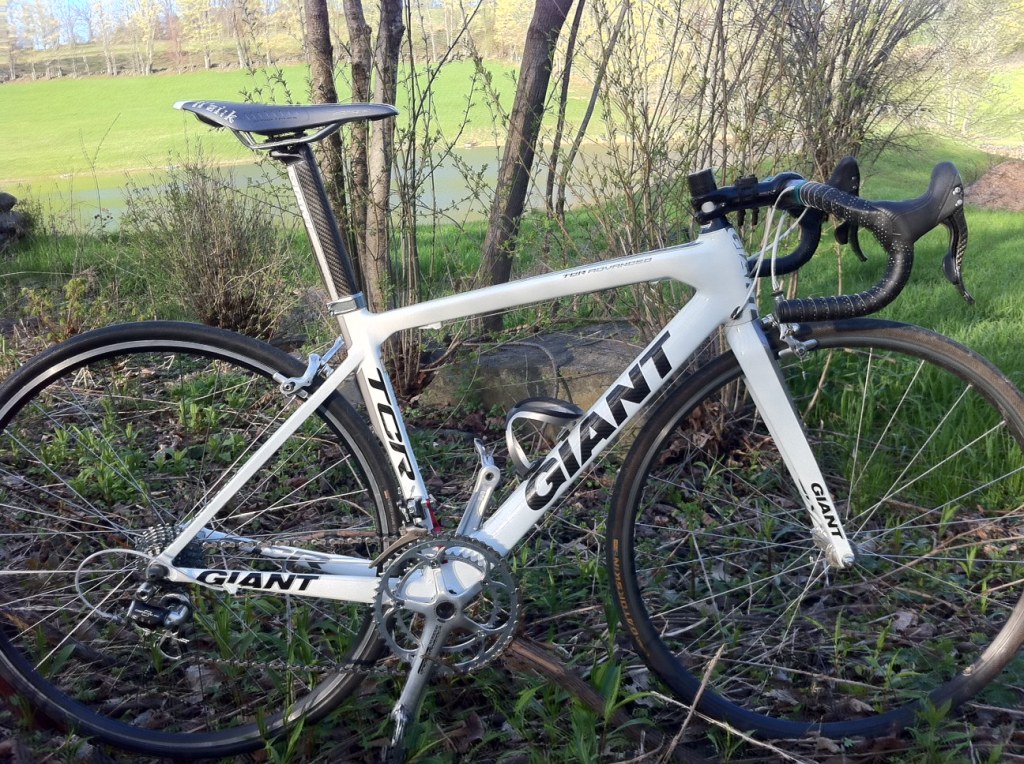
The bikes are a natural place to begin.  If our Trolls could be personified, they would be much like Surly’s officially unofficial spokesman: they are honest, unusual, they ride lots, and they do great with laughter.   Within a few days of leaving Alaska, I had christened my Troll Angus.  There was no real reason, except that I was raised on a farm-and-ranch, love a good steak, and thought that the name suited my bicycle.  My day begins with  “Good morning, Angus, today seems like a good day to kick butt, don’t you think so?”   This bicycle is a tractor with panache.  It can do just about anything.  I do have another bicycle at home, though.   To be completely honest I have three but I don’t like to dig too deeply into the ugly details of my addiction.  Don’t tell Angus.  We’ll focus for now on my Lieutenant, my go-fast bike, my pretty little thing that weighs 17 lbs and speaks Campagnolo.  It’s my Giant TCR Advanced road racing bike that I picked up after my Bianchi cracked.

A bicycle for a different kind of riding.

If I want to race or to fly around the roads on a training ride, my Giant is my dream bicycle.  If I want to get groceries, it’s like a Ferrari with no trunk.  Before Bound South, I had never seriously ridden anything other than a road racing bicycle.  The zen of skinny tires and humming pacelines was all I knew.  When I first took a ride with Angus that fateful day in Fargo, ND, I was admittedly a little bit hesitant.  Angus is heavy.  Angus rolls a little slower with big, heavy, fat, bulletproof Schwalbe Marathon tires.  Angus is designed to be flicked around dirt singletrack like its brother the Surly’s 1×1.  Unloaded, Angus can be twitchy on the road due to its dirt-optimized geometry.  He behaves very nicely on pavement and dirt while loaded.  What can I say?  Angus possessed everything we needed to ride from Alaska to Argentina and he could carry it with class.  Angus was a new friend yet somehow also the bicycle I’ve known my entire life.  Angus represents a beautiful marriage of theory and practice; he is a chromoly touring bike that can run sturdy Surly racks, bombproof disc brakes, broad fenders, fat tires, and God’s uber-German-bicycle-gift to man: the Rohloff.  Angus forced me to reconsider what I could expect of a bicycle.

Fourteen speeds of internal and indestructible magic.

Angus and other bicycles like him represent an idea that I find intoxicating.  That idea is that bicycles shouldn’t be limited.  If your bicycle is only a weekend exercise machine that has your back screaming in an uncomfortable position, chances are that it will hang dusty and unused.  If your bicycle is only a rusted commuter with no brakes that risks your life with every cross-campus trek, it probably won’t last long before it hits the trash heap.  Angus would have me believe in the celebration of form and function; that a bicycle can be your beautiful commuter, your grocery store getaway, and your trail explorer or bicycle camper on the weekends.  Or maybe it can take you all the way to Argentina, if you’ve got the legs and the will and the time to let it take you there.

Climbing in Alaska, a world away it seems.

A few people really get this, and with any luck they’ll shake up the world and get more of it back onto a bicycle.  It seems a world away, but I think of our past photography presentations at Bend Velo in Bend, Oregon and Velocult in San Diego, CA.  These were highlights of our journey through the United States where we stopped at a bicycle shop, put our photography on a screen, and met the local cycling community.  We shared our story and learned more about the places we were traveling through.  These were shops where the owners really got it.   Too many people have forgotten what makes bicycles so powerful and so functional and so beautiful: they become intertwined with our everyday lives.  Here’s to hoping that shops like this can thrive and make a difference.

Bend Velo, one of the shops we presented at in Bend, OR.

As for Angus, we’ll be hopelessly intertwined for a very long time.  Assuming Angus doesn’t die or run away, he’ll be around for the rest of my life, serving as my faithful companion through hardship and illuminating new horizons with every turn of his wheels.

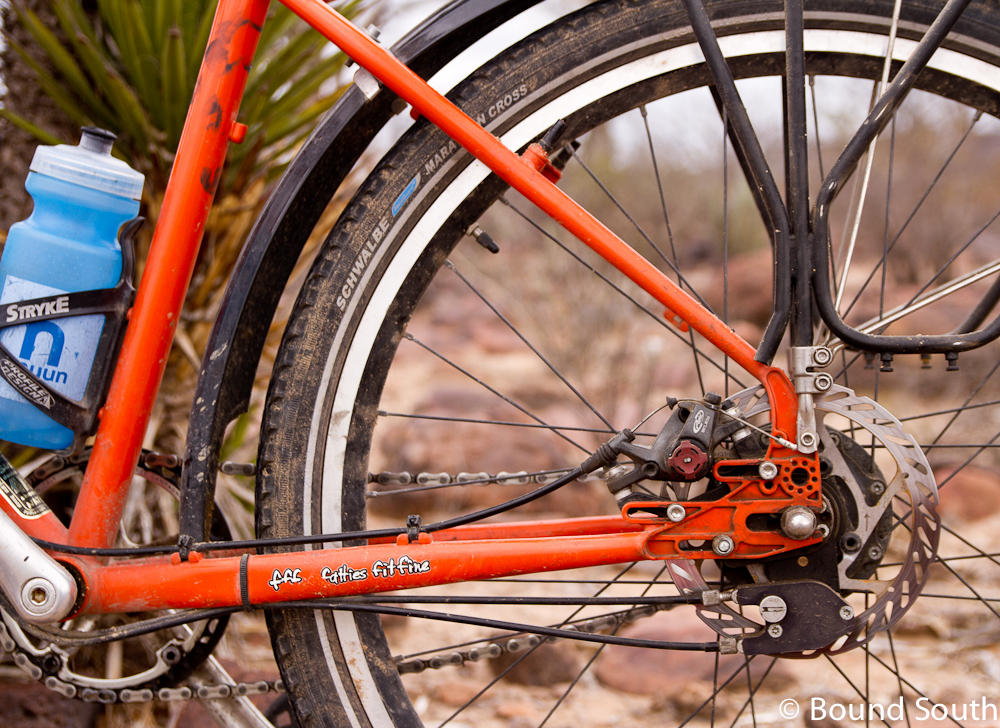
Functional, mechanical elegance: rotor, brake, hub, shifting assembly, dropouts.

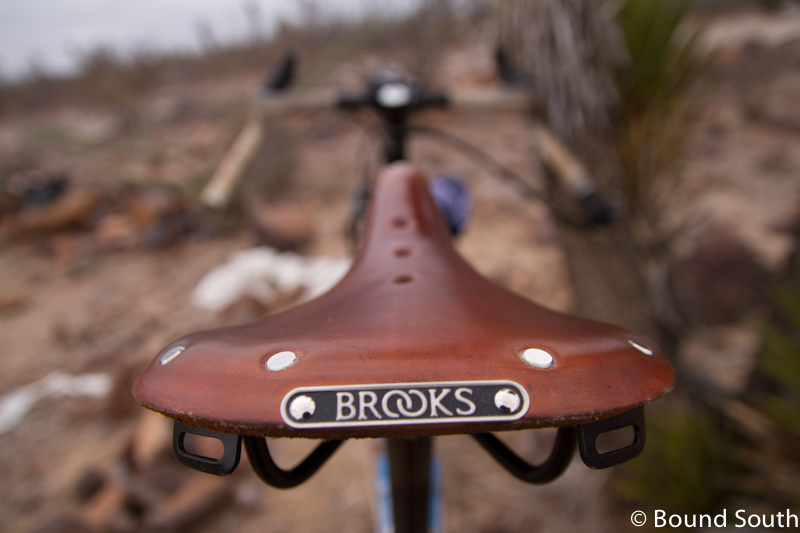
Brooks: Do your butt a favor, please, and get a leather saddle.

Climbing the cobblestones up to our home in La Paz.