Skip to content

Posts by Isaiah Berg

Citystates of Mind

Communities of the Pacific coast are tied together by the ribbon of road known as US Highway 1.  One grueling day took us across Los Angeles.  We found that many disparate communities were shockingly proximate to one another.  The limitations of bicycle travel did not prevent us from seeing spectacular beaches, hillside estates, beachfront mansions, and urban blight all within a few miles of one another.  Cities have always provoked the human spirit with their visible geographies of inequality; after all, it was the hellish and urban factories of Manchester that inspired Marx and Engels against capitalism.  The landscapes of pastoral agriculture rarely incite our passions in quite the same way.  Cities seem to bring out the worst in humanity and yet somehow provide the structure for all of those terrible little demons to coexist so productively.
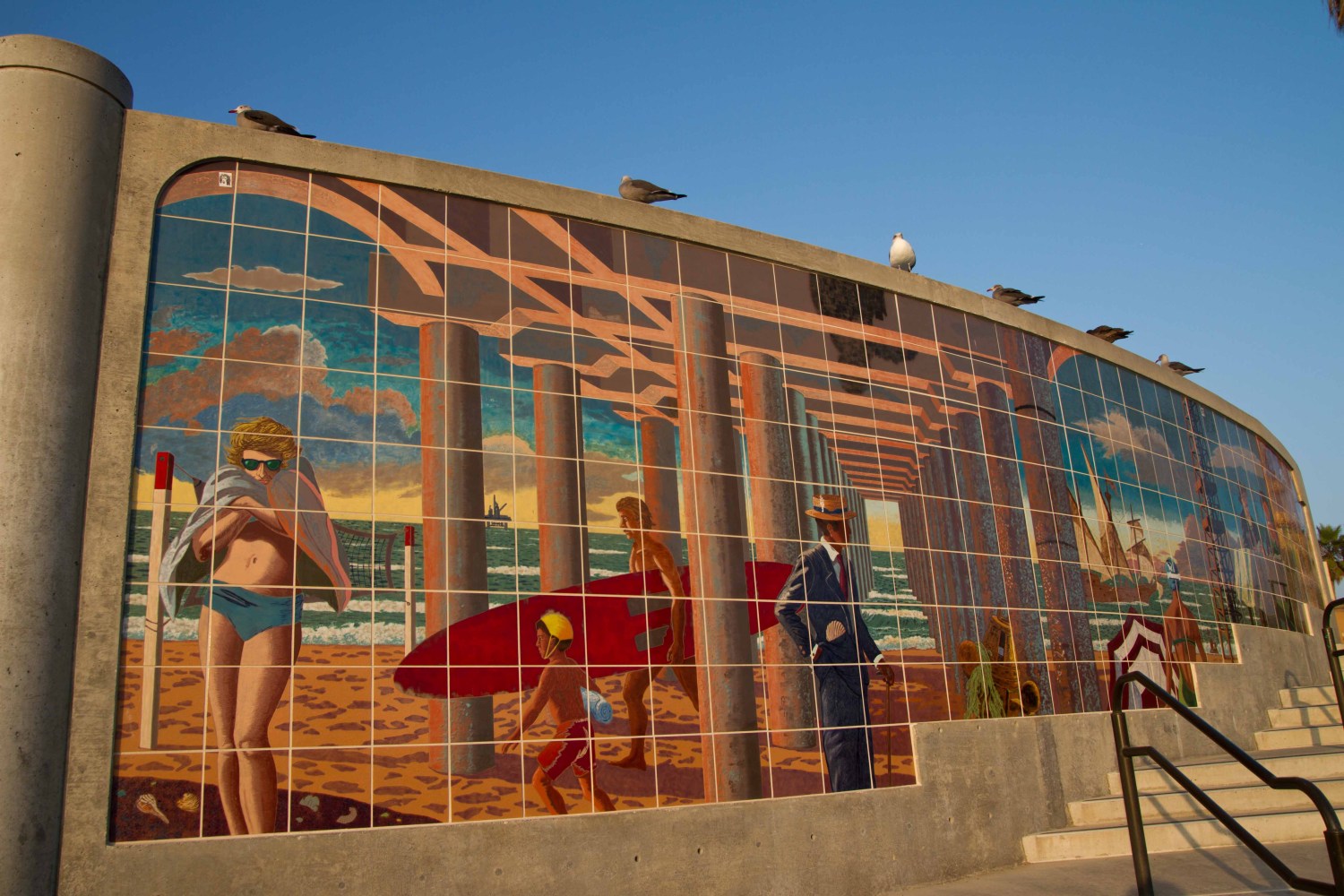
Beach murals.

Cities are here to stay.  The world continues to urbanize.  Opportunities and human possibilities abound in cities and usually cannot be found outside of them.  The spectacular and unexpected means of progress within cities is what makes The Economy of Cities one of the most important books to my personal intellectual development.  The city has grit, romance, rubbish, flash, and jazz writ large across its complex landscape.  In this city of Los Angeles and every other great city I know, I am hopelessly intrigued but also troubled.  My roots in rural North Dakota have bred a fierce and rugged individualism rooted in a supportive, tight-knit community.  I’ve been blessed enough to travel to some other corners of the world, with college in a New England town and terms abroad in Peru and the Czech Republic.  I’ve never truly lived in a city but I’ve spent enough time in them.  I know only what I see and I do see a city in my future.  Which city – who knows?  Perhaps any one where I can ride my bicycle to work and to get groceries and to escape. There is something disconcerting about that inevitability, however.  Embedded in the city are decades of infrastructure and regulation and decisions and history upon which the matrix of modern life is negotiated, for better and for worse.  There are car commutes full of angry souls imprisoned in speeding vehicles, ossified social roles and city cultures, zoning codes and permits and endless asphalt and city lights that sparkle to dim the stars.  There is also the critical mass of diverse people and passions, boundless opportunity, and the promise of progress and new ways of doing.

What if we could dissolve the boundaries between the parallel urban universes we encountered by bicycle in Los Angeles?  Can one shrink social distance and eliminate the dehumanizing anonymity of the city?  And can it be done while preserving the urban diversity and freedom that produces ever more spectacular expressions of the human spirit for innovation and prosperity and joy?  These are just a few thoughts that occupied our minds and our conversation as we crossed the great cities of southern California.
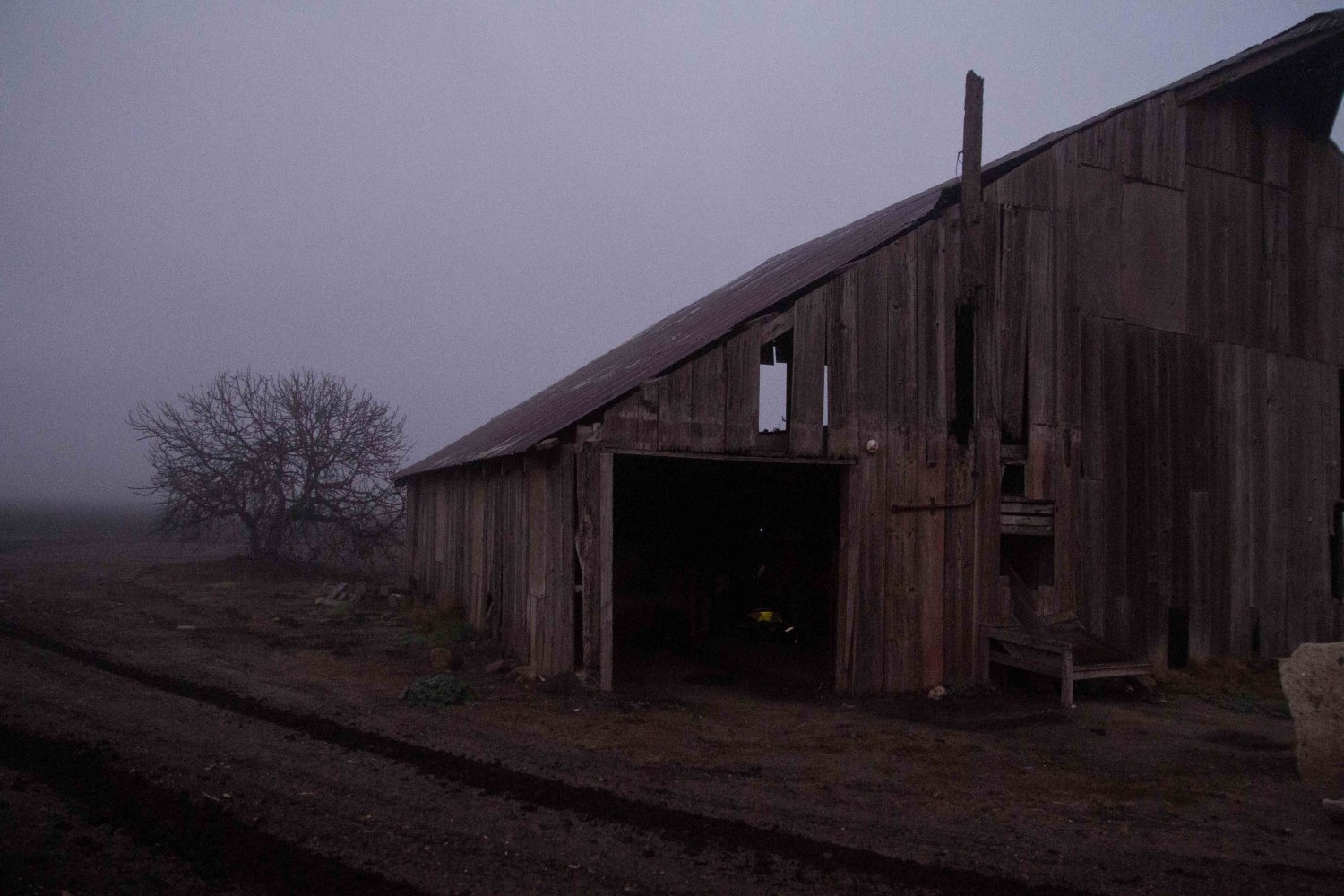
Our last campsite before the string of cities.

Saddle Up, Cowboy

Inextricability is frequently misunderstood in life.  Contrasted with the wandering of the autonomous, inextricable lives are obviously entangled with notions of purpose, community, and continuity.  Many twenty-somethings fear the specter of commitment, perhaps not out of loathing for these principles but out of fear for frequent separations.  Yet the inextricable life is inevitable.  Life is an election that you cannot stay home from because you vote with your feet.  We carry necessary anchors with us through life and our bodies grow stronger from the movement.

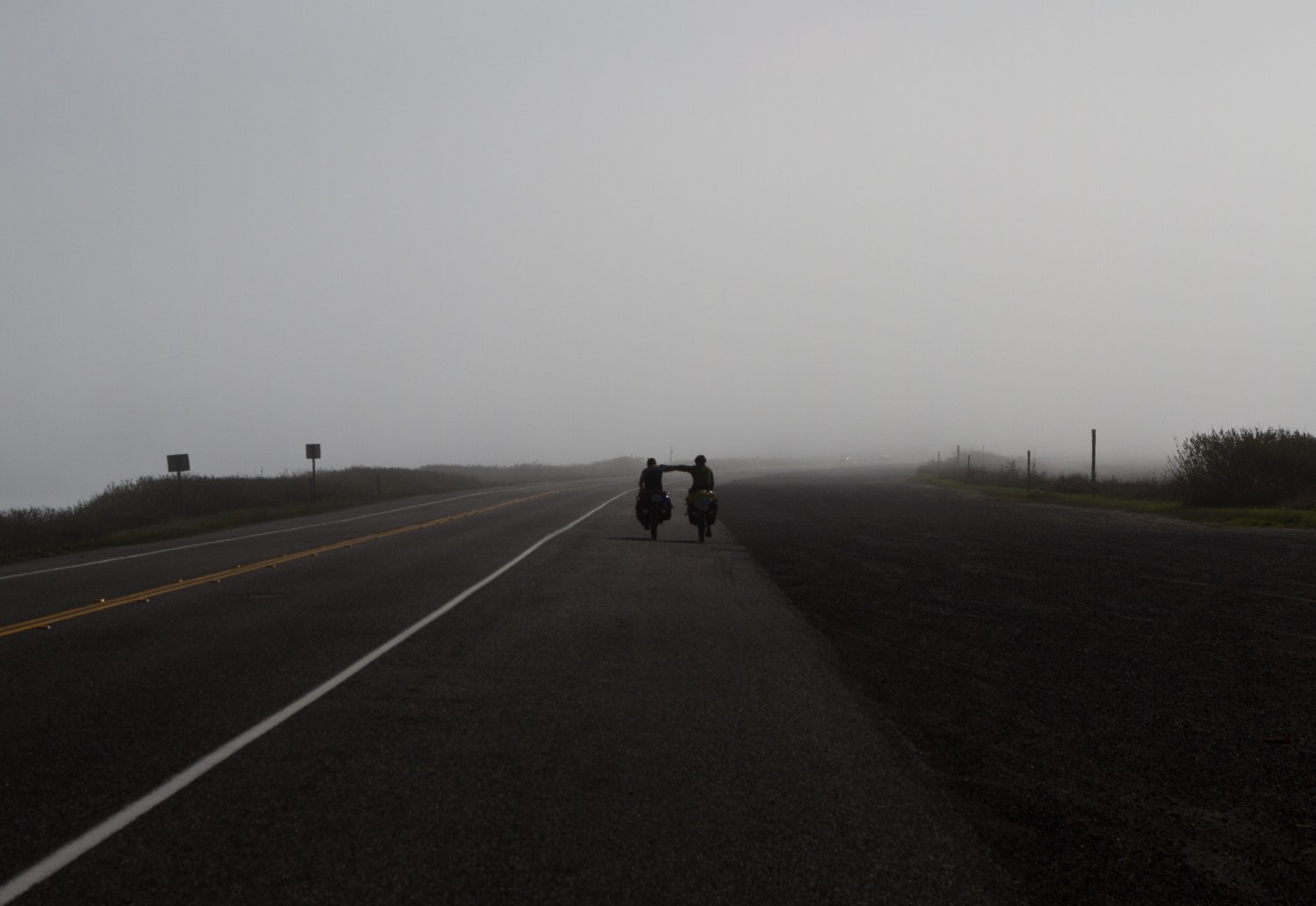
Beautiful Highway 1.

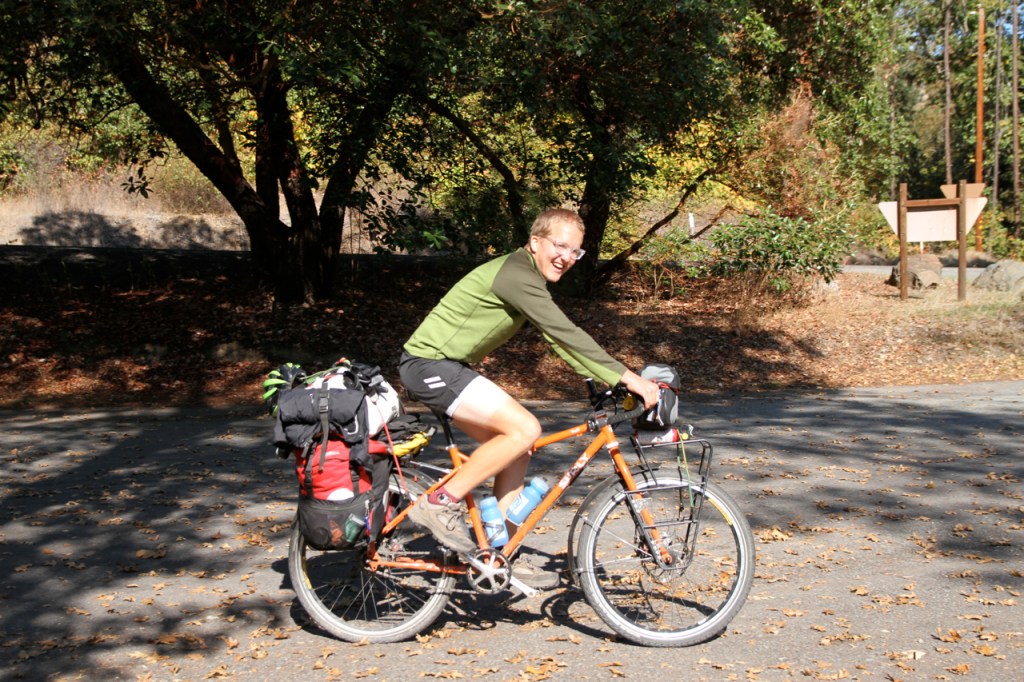
Minimalism is like moving those anchors, not cutting their ropes.  Humanity drops anchor in wealth, homes, cars, relationships, and careers to name a few things.  There is an important dual lesson in all of this: the first is that we have a choice in where we anchor ourselves.  The second is that we have no choice but to choose.  I remember selling my car in Anchorage three months ago before we began riding our bicycles north to Denali.  That sudden liquidation of my trans-continental transportation left me feeling liberated and proud.  Do not underestimate how liberating minimalism can be!  But months later, the personal anchor of my beloved Honda has been wholly transferred onto the rack of my Surly Troll.  I covet and adore it with the same intensity.  Don’t fool yourself by thinking that you can live anchor-free; take it from three guys with nothing but three bags and a bicycle.  We carefully measure the inextricability of our lives by bicycle, always critically self-aware of our perceived necessities – whether they be your only comfy pullover or the heaping bowl of oatmeal we delight in every morning.  Minimalism forces you to confront and better appreciate your anchors of necessity.

Cool California coast.

Time compels us forward and bids us southward, away from these past days with family in the Bay Area.  Our cause calls us to our fundraising and other personal goals for this journey.  Inextricability is a daily rhythm that binds us once more to a road going south from San Francisco.

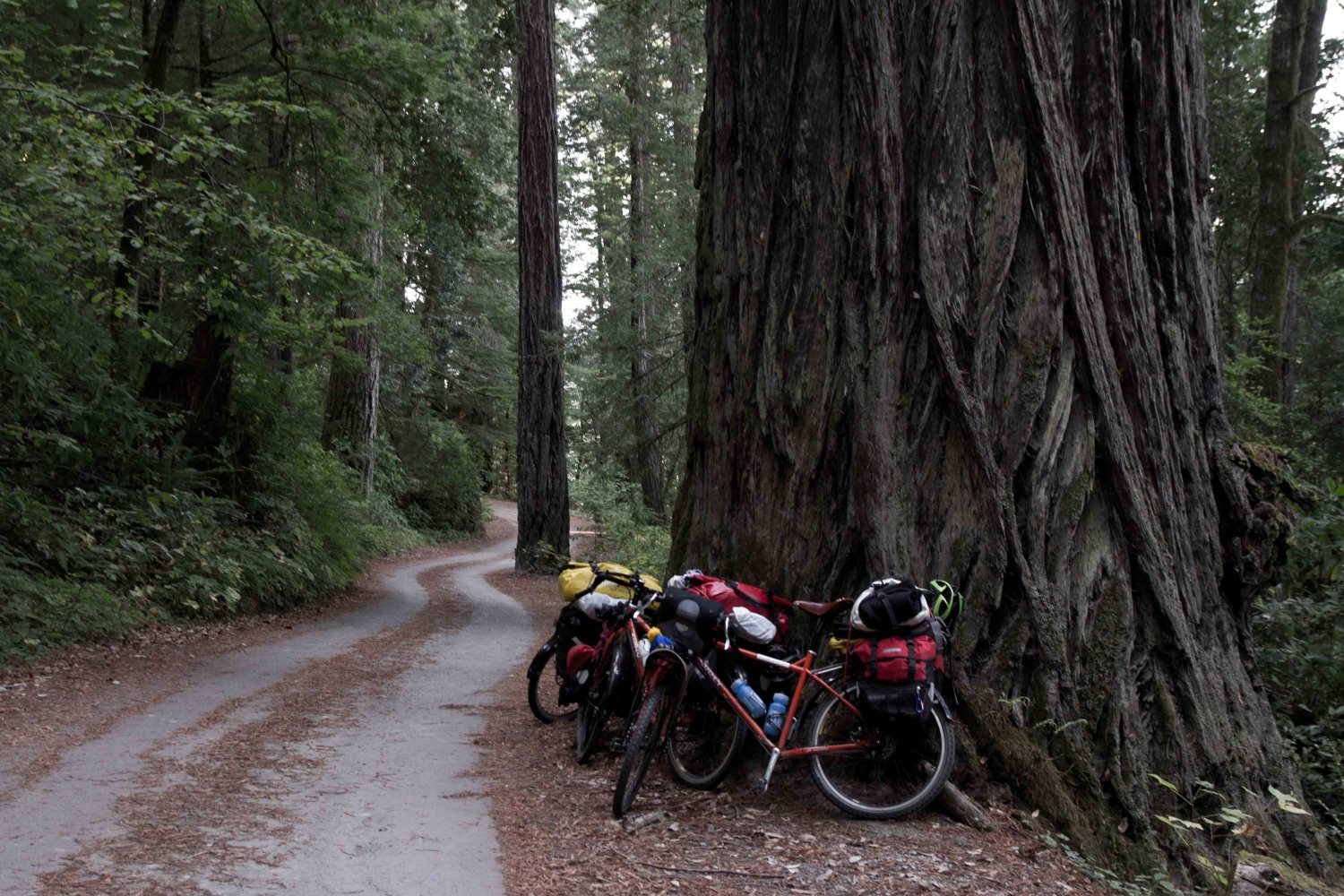
Reveling in the Redwoods.


How You Help

Unsurprisingly, people will often ask us how they can help us.  Living by bicycle acquaints you well with the immense generosity and blessings of complete strangers.  I thought it would be wise to write here explicitly what makes a real difference for Bound South.

  • Donate to our cause.  This is why we ride.
  • Follow this website, and share it with everyone who could possibly enjoy it.
  • If you meet us on the road, give what you are able: a word of encouragement, a jar of peanut butter, or a place to pitch our tent.
  • If you cannot meet us on the road, send us an electronic message or a mailed package…or help us down the road.

We’ve raised over $4000 of our $60,000 goal.  Every donation counts, no matter how small, and 100% of your donation goes to Habitat for Humanity to build a home in Eastern North Dakota for a family in need.

We derive immense satisfaction from sharing the beautiful and powerful things we experience with an audience.  If you enjoy a post or have a question, please let us know in a comment.  If you use social media such as Facebook, share our updates; if only ten people did this every day our journey could quickly reach thousands of new readers.

We have received so much generosity from people across Alaska, Canada, and the United States.  We hope for that goodness to continue.  Even the small things matter; a few encouraging words from passing motorists have lifted our spirits during countless difficult climbs.  If you can offer more, a shower, laundry, and a roof to sleep under are spectacular gifts.

We thrive on the messages and comments we receive along our journey.  Cookies and care packages for our mail drops are always special treats.  Do not underestimate an encouraging word.  If you have family or friends or connections in the areas we pass through, please let us know.  A friendly face in an unfamiliar place will be a tremendous blessing, especially as we move south of the border through Central and South America.

Thank you to the many people who have helped us already in this journey from Alaska to Argentina.

Out of Oregon

Thematically, Bound South is an adventure beyond the shadow of a doubt.  If one were to write the book, it would not be a placid Walden on wheels.  A life by bicycle is not one of boundless mental reflection and meditation; it is actually a life missing its comfortable dose of autopilot.  We are overloaded with the sounds and smells of the world and the subtleties of the sympathetic nervous system, listening to the engines of our body and attending constantly to the biology of hunger, thirst, and joy.  There are moments of exhilaration; the car that passes too close, the lost connection of fast wheels in loose dirt, and the magical descents when your disc brakes can run cold in a wheeled emulation of flight.

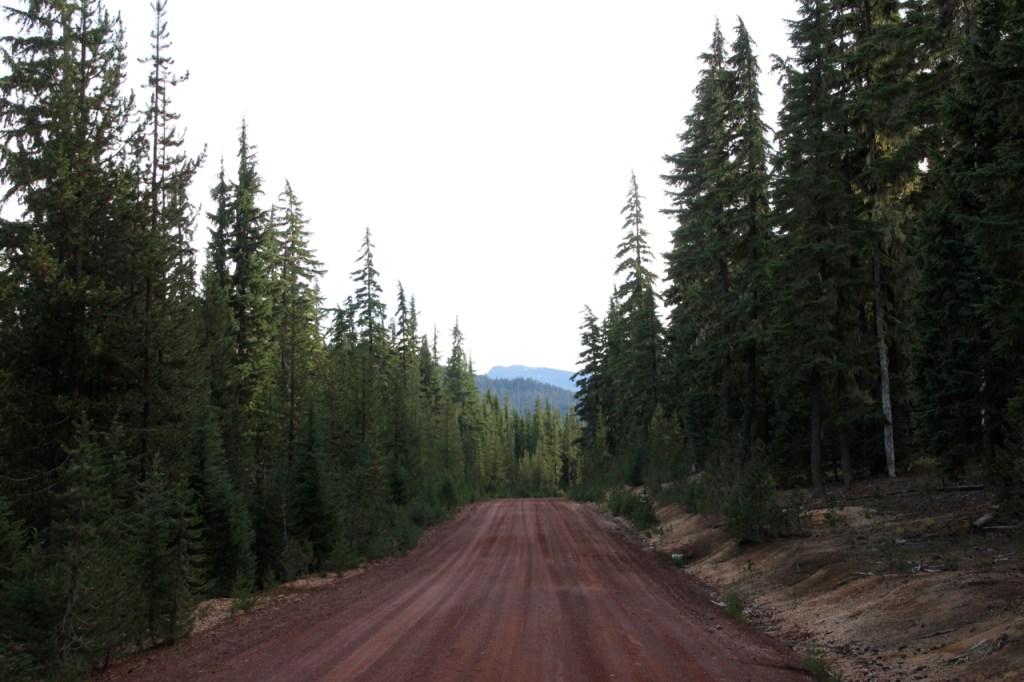
Red Dirt Descent down Forest Service Development Road 60

Lest I give you the wrong impression, however, this is no thriller novel.  There are some moments of climactic choice; whether to take the ditch at the sound of an oncoming 18-wheeler, to take uncertain forest roads versus sterile and certain highways, and whether to seize the $1.88 tortilla chips in the constant battlefield of the grocery aisle or rather cede victory to the twin nemeses of Hunger and Budget.  Our maxim has become, “When in doubt, choose adventure and choose food.”  There is enough oscillation between meditation, exhilaration, and simple self-preservation to occupy the mind for a lifetime of riding.  If you don’t believe me, just get outside and ride your bike.

Camping at Cultus Lake at high altitude. Too cold to swim.

Leaving Bend was no easy task.  Getting to Crater Lake National Park was at least as difficult.  The most extensive and difficult climbs of our journey made each day a trial of our accumulated strength.  Holding to our word and our maxim, we “chose adventure” through the Deschutes and Umpqua National Forests, eschewing the paved roads off of the Cascade Lakes Highway and instead traversing some of the most impassable and spectacular forest service roads we had ever seen.  The Trolls were made for this, after all.  One only has to climb up to 6,000 ft. Windigo Pass with a heavy bike on sandy single-lane dirt to appreciate what we faced on just one afternoon in central Oregon.

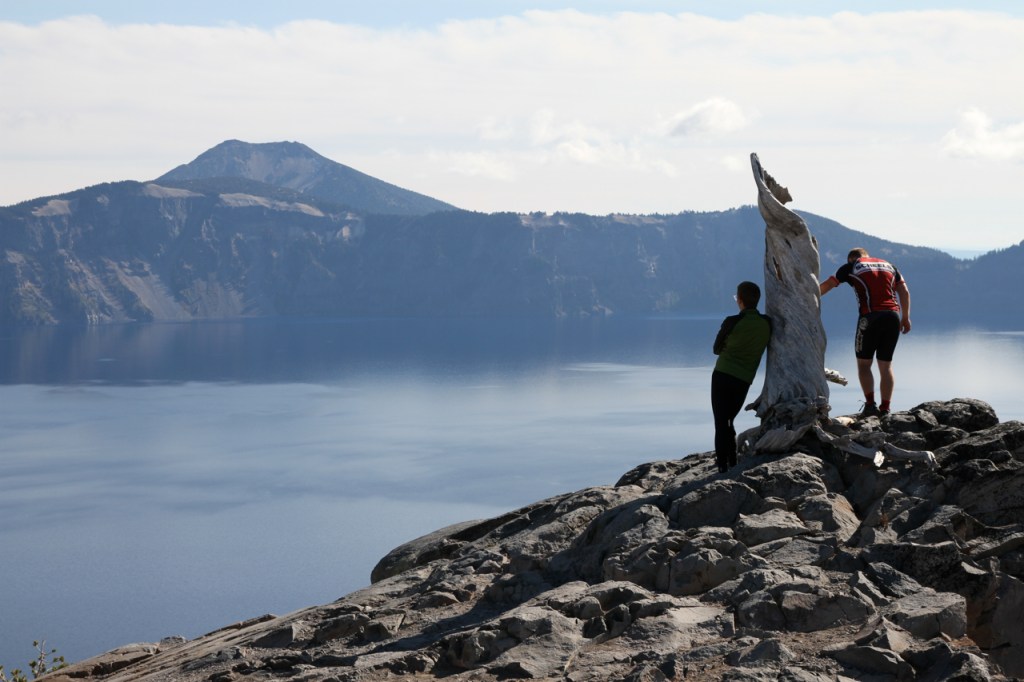
Stopped and stood for a while at the rim of Crater Lake. Also too cold to swim.

What goes up must come down, and we earned every single vertical foot that brought us up to the wonder of the world known as Crater Lake.  Thousands of feet deep, Crater Lake rests as the remnant of a volcanic collapse from an ancient era, ringed by park roads and campsites closed for the proximate winter.  It was absurd to ride our bicycles over nearly 8,000-foot-high Crater Lake in late October, a blessing of a warm sun and clear skies.

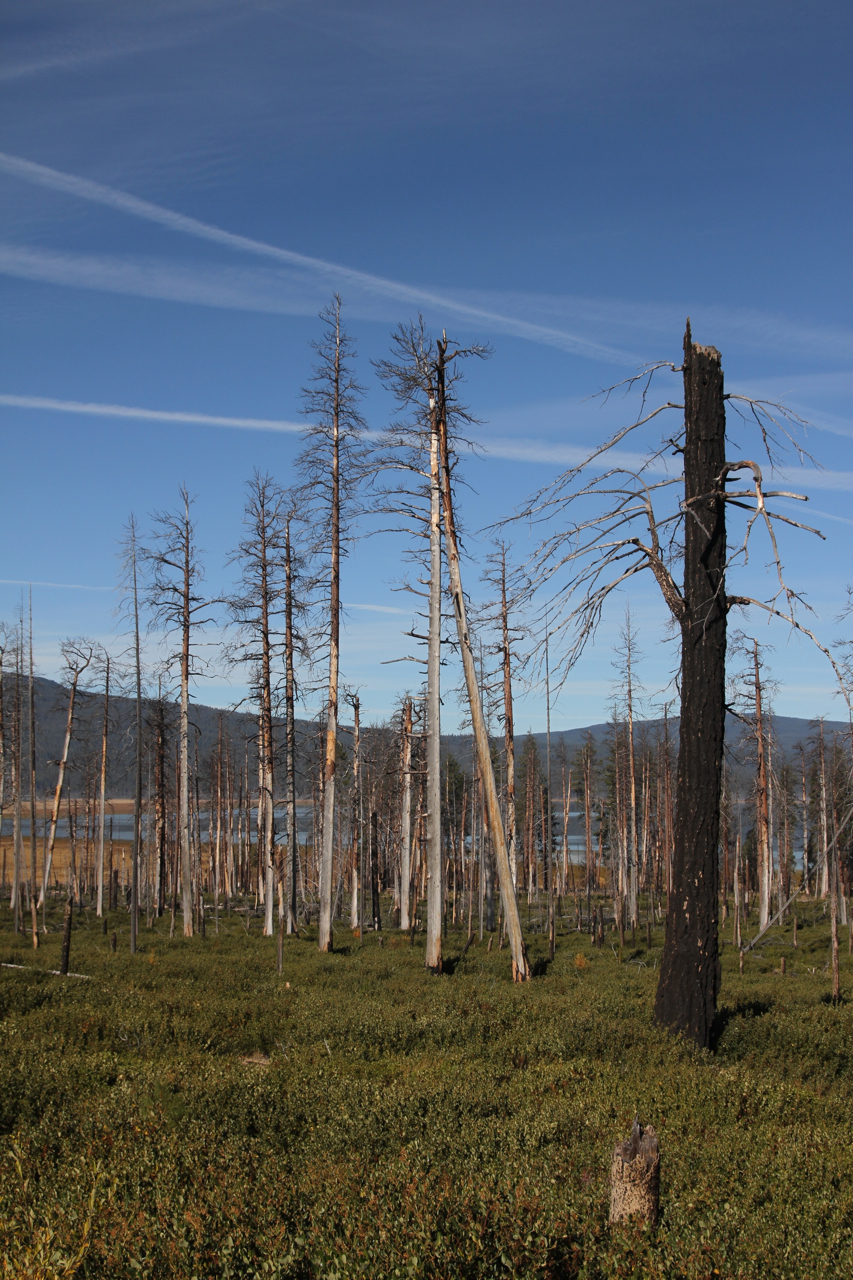
Lodgepole pine remnants from the Davis Fire of a decade past.


We hope and pray for more pleasant absurdities between here and Argentina, such as the outhouse we used to cook oatmeal in when our campsite froze overnight west of Prospect.  Or the reappearance of my awesome tan lines.

Tan-lines too marvelous for words.

We ride on for California and continue a dogged but sustainable pace, stopping to rest and reflect in equal measure with our adventures and absurdities.  Why we ride will always be the critical thread that moves with us to Argentina and will one day bring us home.

The long road to Crater Lake over old volcanic ash.

Bend and Break

Synchronization.  I was devastated when I spelled that word wrong at the Ramsey County Spelling Bee in 7th grade.  The word captures the feeling I’ve had since crossing the volcanic arc of Oregon’s northern Cascades.  Things seem to have come together for Bound South, with a shared rhythm despite the brotherly dissonance that makes a journey like this so special.  Our MSR Mutha Hubba seems to erect itself when night falls.  The innumerable varieties of Campbell’s Chunky Soup have been thoroughly vetted.  The clear winners have emerged to take their rightful place in our panniers alongside our rice and rotini.
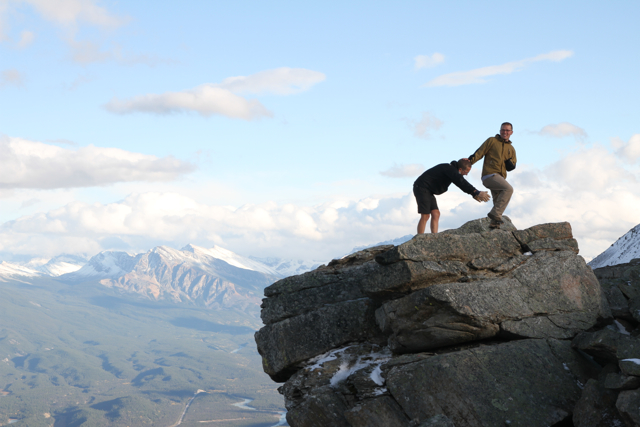
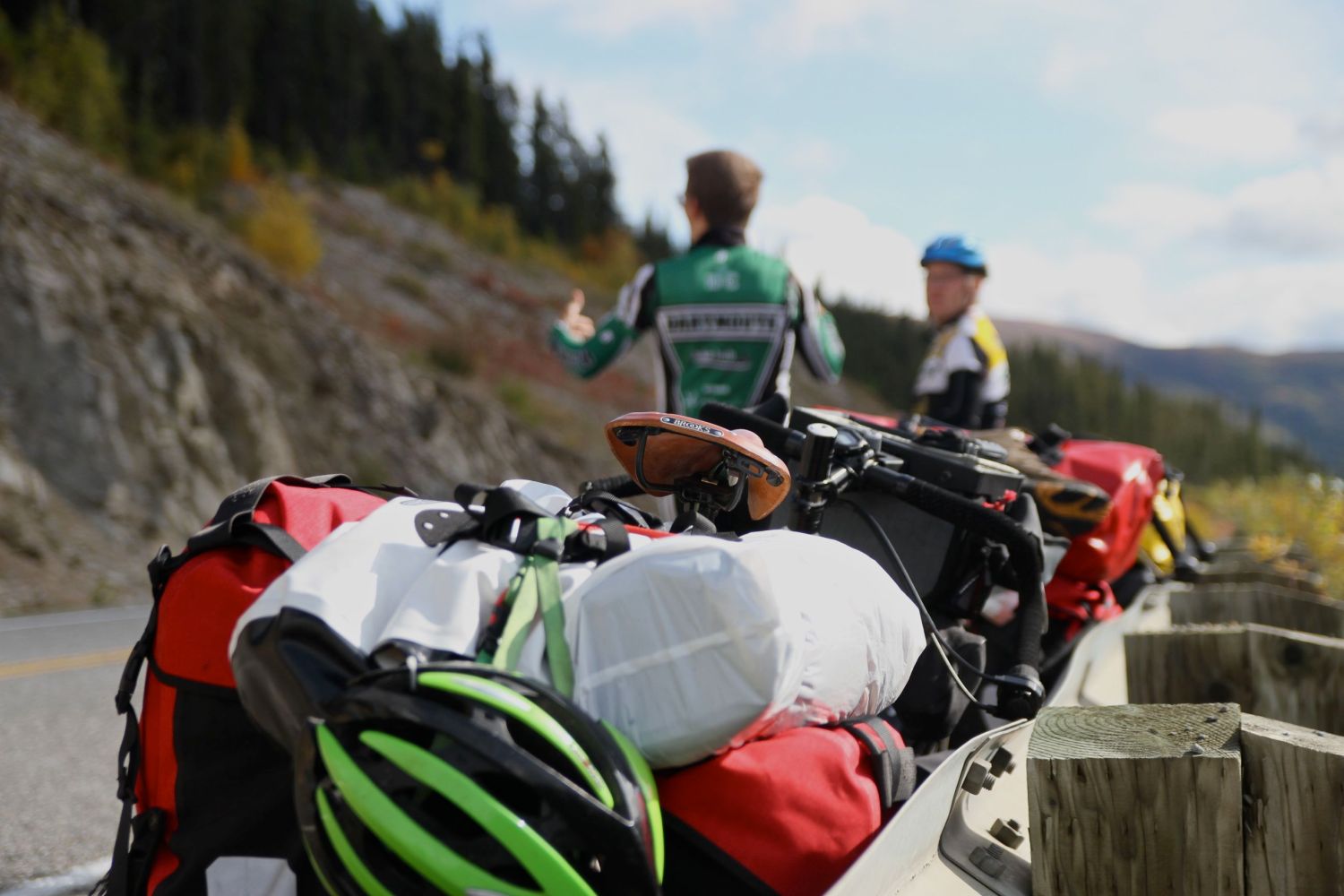
Early morning over Mt. Hood, 107 miles to go.

We rise with the sun and ride despite the wind until the time is right to stop.  There are few explicit plans or deadlines and yet we have internalized this southward tempo like some kind of circadian rhythm.  How far today?  This has become a rhetorical question, an inspiration, and our daily adventure.

From lush timber forest to desert in just a few miles. Amazing contrast.

107 miles separated us from Bend in Oregon’s high desert, a full day of hard riding from the timber forest of Mt. Hood where we camped.  A hard day of riding was followed by some splendid days of Habitat building, photography presentations, and meeting with family and friends.  Bend has been the welcome breath between movements that we needed.  The seemingly permanent sunshine of Central Oregon belies the cold roads and high altitudes that still lie ahead.  We can’t help but soak it in while it lasts.

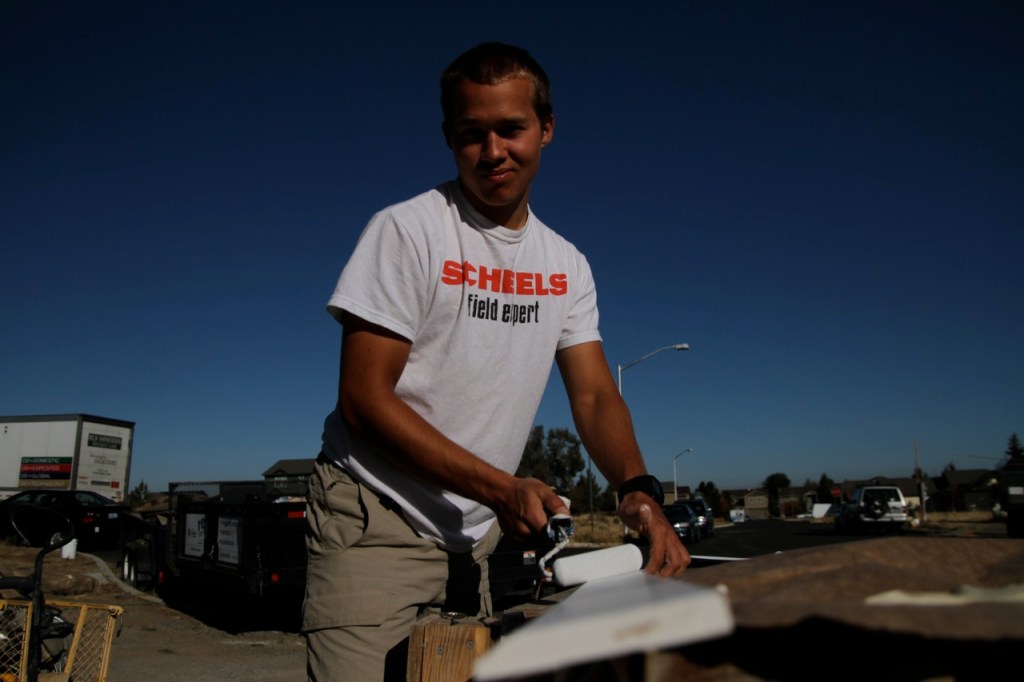
David shows off his Habitat build painting skills.

Every day I like to ask myself whether I believe in what I am doing that day.  It’s a simple litmus test to isolate the road ahead from the accumulated weight of the long road behind us.  Days of rest have been sweet here in Bend, but already I am itching to get back on my bike and ride south.  I love this journey as much now as I did leaving Anchorage in August.

Long and windy road to Bend with mountains to the west.


Different Names

Unsurprisingly, Washington State was named for the honest President, American hero and amateur cherry-tree butcher known as George Washington.  One might assume that the names of other places across the Americas are logically assigned as well; however, one would be sorely mistaken.  Our inner romantics cry out for a Jasper of the Canadian Rockies that must have been named for those opaque stone walls of a heavenly New Jerusalem; or perhaps for a Portland that was framed as a majestic gateway to Oregon’s western shores.  In reality, Jasper was named after an unremarkable fur-trading post, and Portland is Portland because of the strange coincidence of a lost coin-toss, a New England city, and an isle near Dorset, England.

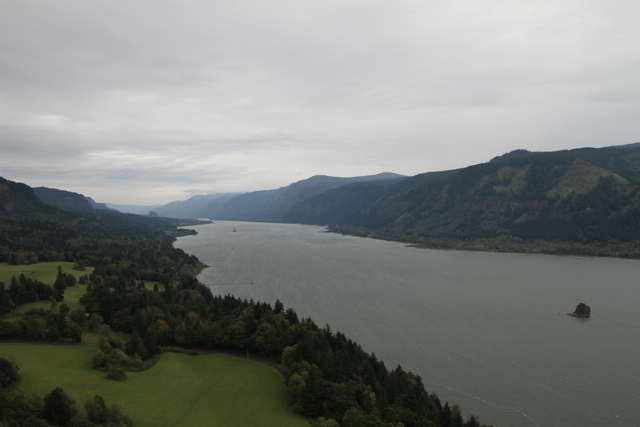
The Gorge closer to Portland.

The names and town signs and landscape changes with every mile we pedal.  Vast geographical differences can mask the wondrous commonalities shared by the people we encounter.  Small anecdotes from our days riding through the Inland Empire illustrate much of this goodness.  A marine biologist and schoolteacher sheltered us from cold rain in the mountainous apogee of the Columbia Gorge.  A bar owner let us camp in his beer garden, sheltered from the ruthless winds that were arrayed daily against us on the flat desert plains of central Washington.  Perfect strangers offered donations, directions, and invariably a prediction of our impending doom in Mexico.

I wonder when this strange mixture of luck and providence will run out.  I wouldn’t mind being lucky and good…but usually I don’t count on either.  When I consider our journey I recognize that there really is no such thing as an expiration of luck or providence.  The deepest depths of frustration and misery that we encountered (which seemed rather unlucky at the time) are rooted now so firmly in our most spectacular rides and relationships.  It was bad luck that gave us headwinds on the Columbia, but that same bad luck that gave us a beautiful tent site on a sandy patch of land in the Gorge.

Sunrise, camping on the Columbia Gorge.

A weekend in Portland brought us time to rest, to eat unheard of amounts of food, to race our Trolls for fun, and to explore what the city had to offer.  We will miss Portland and its roses, its food carts, its bicycles, its swing, and its indelible urban culture.  We’ll be back someday without a doubt.  Yet there is no remorse in leaving, no sense of loss as we once more saddle up and ride towards Bend.  The names and faces will change but I am confident that there will always be a few for whom this goodness that we so enjoy will remain unaltered.

Obscene amounts of exquisite food with the Pfeiffers.

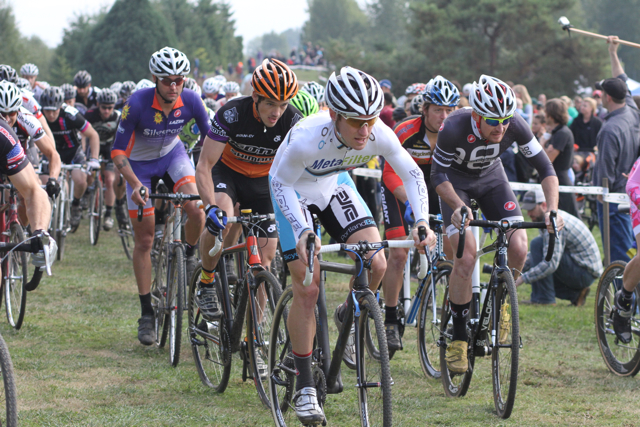
If I could offer you one highlight from our  weekend in Portlandia it would be our continuing tradition of doing non-restful things on rest days.  Case in point: cyclocross racing at Cross Crusade here in Portland.  The local ‘cross scene in Portland is arguably the best in the nation and we couldn’t pass up the chance to race and experience the spectacle.  We leave for Bend with just a little bit of fear in our legs but no regrets.  David and Nathan received their initiation to the world of bicycle racing and we all pushed our limits.  Onward through Oregon and on the road once more, Argentina is still very far away.


America

_____________”The spirit is at home, if not entirely satisfied, in America.”_____________

Thus wrote Allan Bloom in Closing of the American Mind.  I couldn’t help but commit the quotation to memory and it came to mind as we passed through the invisible veil separating Canada and the United States.  The boundary between them is an arbitrary political construction that poses no barrier to the mixed conifer forests, mountains, and cold autumnal rain that covers the landscape this time of year.  The casual bicycling observer would note that miles pass by much more slowly than kilometers, and that America got something right when it minimized taxes at the grocery store.  Yet these are trivial distinctions that lay like debris over the spectacular character of this America that we call home.

Canadians will celebrate their Thanksgiving this coming Monday.  Though our own Thanksgiving is still far away, I wish to excerpt from Vermont Royster’s “And the Fair Land” which is printed annually on the Wall Street Journal’s editorial page every Thanksgiving day.  We are forever grateful for the goodness of those who have helped us since our return to the States.

But we can all remind ourselves that the richness of this country was not born in the resources of the earth, though they be plentiful, but in the men that took its measure.  For that reminder is everywhere – in the cities, towns, farms, roads, factories, homes, hospitals, schools that spread everywhere over that wilderness.

We can remind ourselves that for all our social discord we yet remain the longest enduring society of free men governing themselves without benefit of kings or dictators.  Being so, we are the marvel and the mystery of the world, for that enduring liberty is no less a blessing than the abundance of the earth.

And we might remind ourselves also, that if those men setting out from Delftshaven had been daunted by the troubles they saw around them, then we could not this autumn be thankful for a fair land.

Bicycle Cowboys on Ice

Housekeepers from a lodge in Lake Louise found us behind a nondescript parking lot in the village.  They were some British Columbian girls on their way home from work.  We were huddled around our MSR stove waiting on our pasta noodles and Campbell’s Chunky Prime Rib & Vegetable soup.  Due to a closed campground, and the threat of a $2,000 fine, we were planning on stealth-camping in the trees down by the Bow River.  “You guys are like bicycle cowboys!”  I guess we are.

Taking a short break from climbing out on the cold Icefields.

It has been a wild ride from Jasper.  Like so much of the journey thus far from Alaska, it has been composed of unexpected blessings and the absence of what some might call “responsible planning.”  It all began in the town of Jasper; we arrived wet, cold, hungry, and later than expected.  This is par for the course for Bound South.  We spent more than an hour looking for an evening church service as well as a shelter to pitch our tent under.  We didn’t like the idea of spending $25 or more for a patch of cold and exposed campground dirt far from town.  We stumbled upon an evening service at a Baptist Church and before we knew it we had a place to stay.

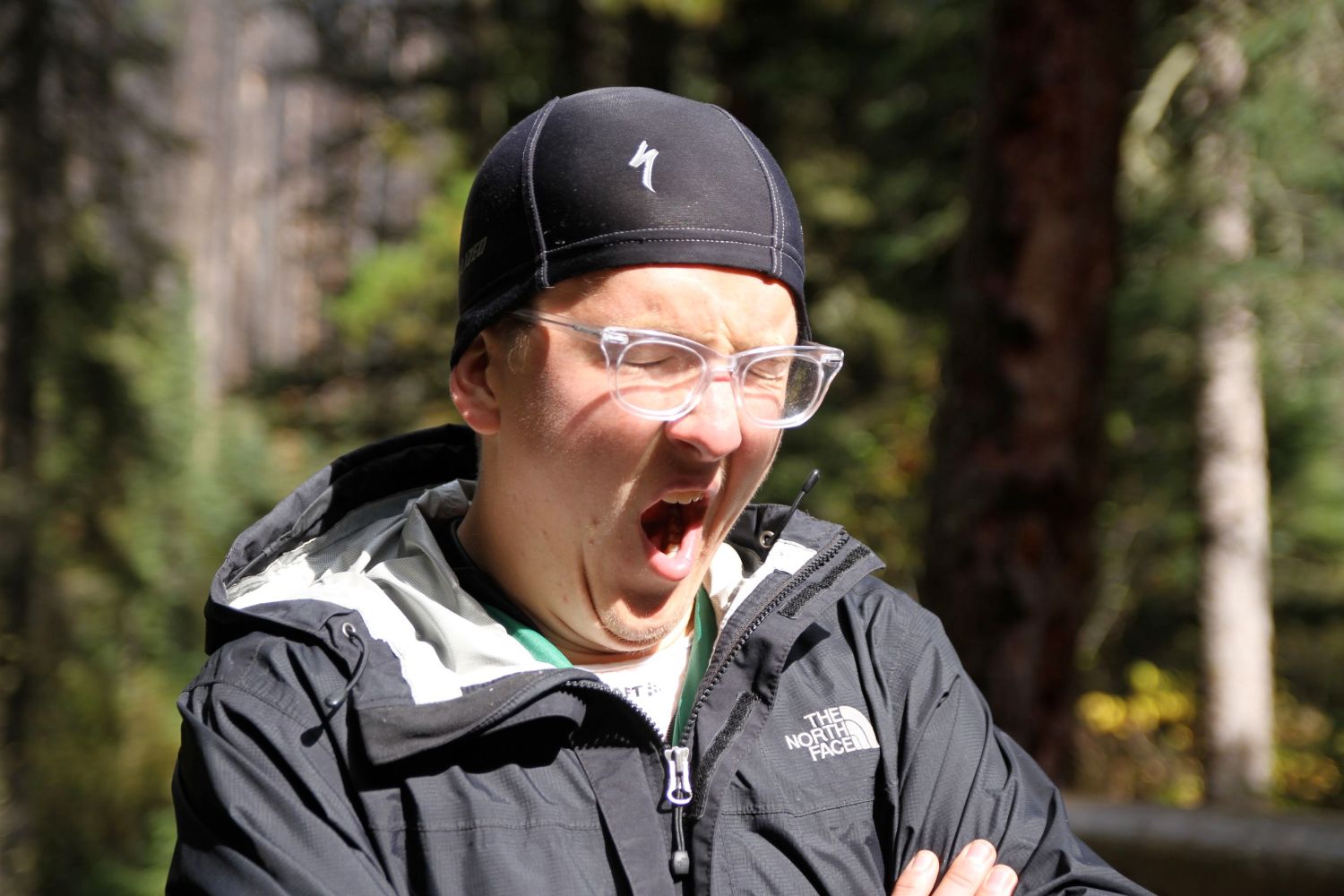
Gratuitous yawning.

Thinking that this was too good to be true, we felt that we should be as ambitious as possible with our day of rest.  Ideally, we would be ambitious with a combination of minimal planning and abundant risk.  We are bicycle cowboys after all.  Naturally, our “rest day” consisted of hiking up 3,000 feet of vertical on Whistlers Mountain outside of Jasper.  The recommended time for doing this hike was a minimum of three hours up and two hours down.  We were up and down in three hours total, which was fortunate because it was freezing and windy at the top and we returned home in the dark.  Running up and down a mountain takes a toll on the human body and our only serious adaptation has been to riding our bikes.  Needless to say, our legs got wrecked from all of the fun we had on our rest day.

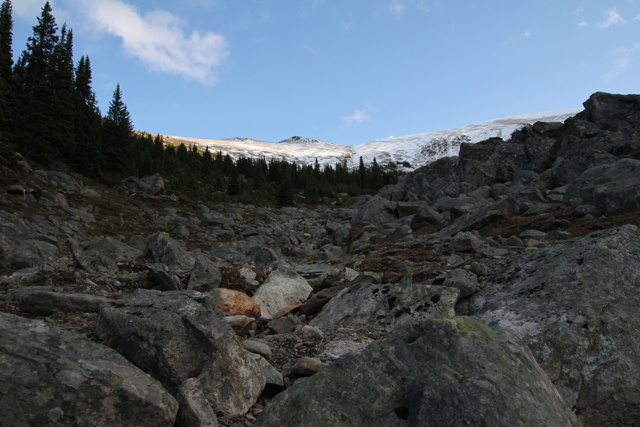
Hiking closer to the summit of Whistlers.

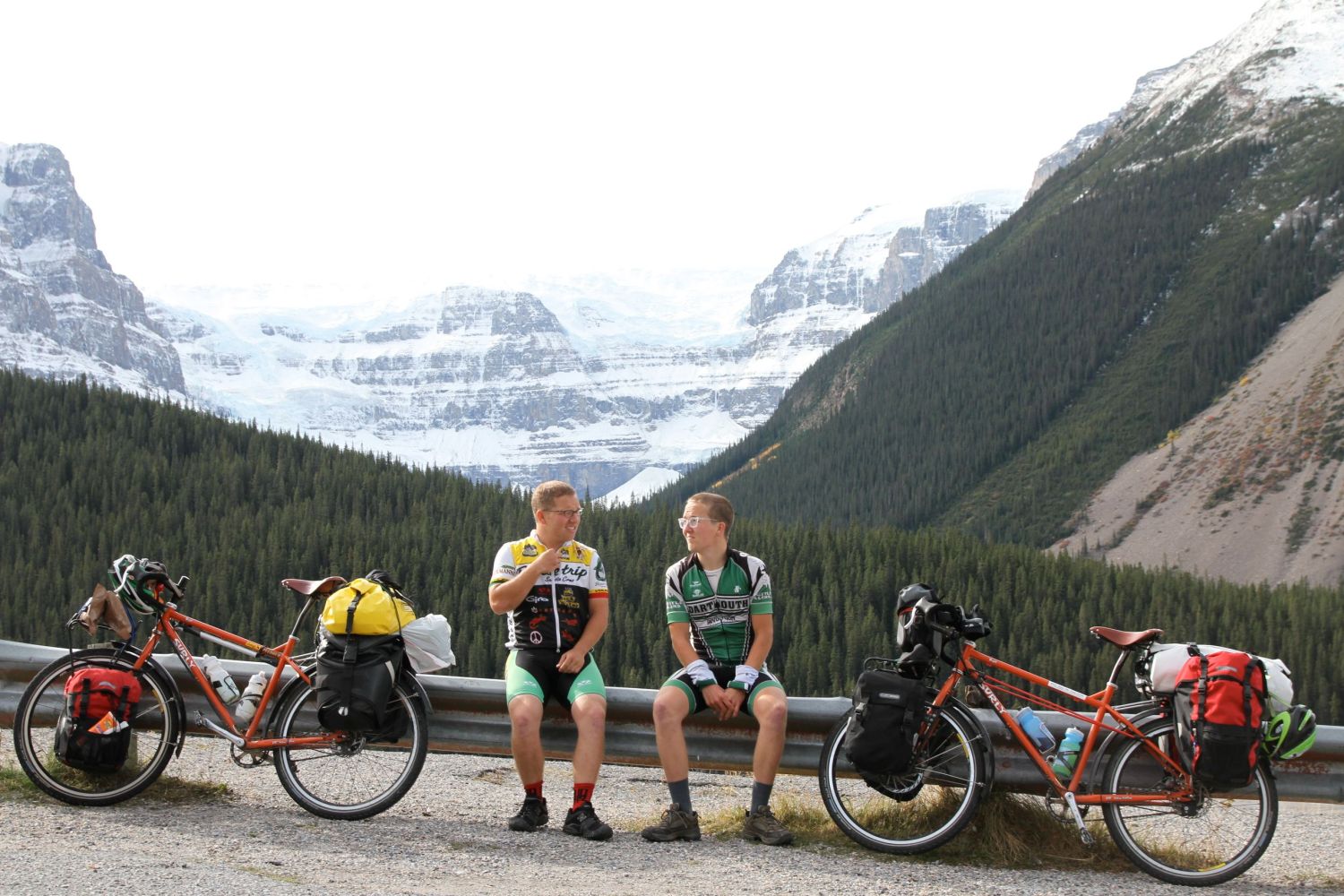
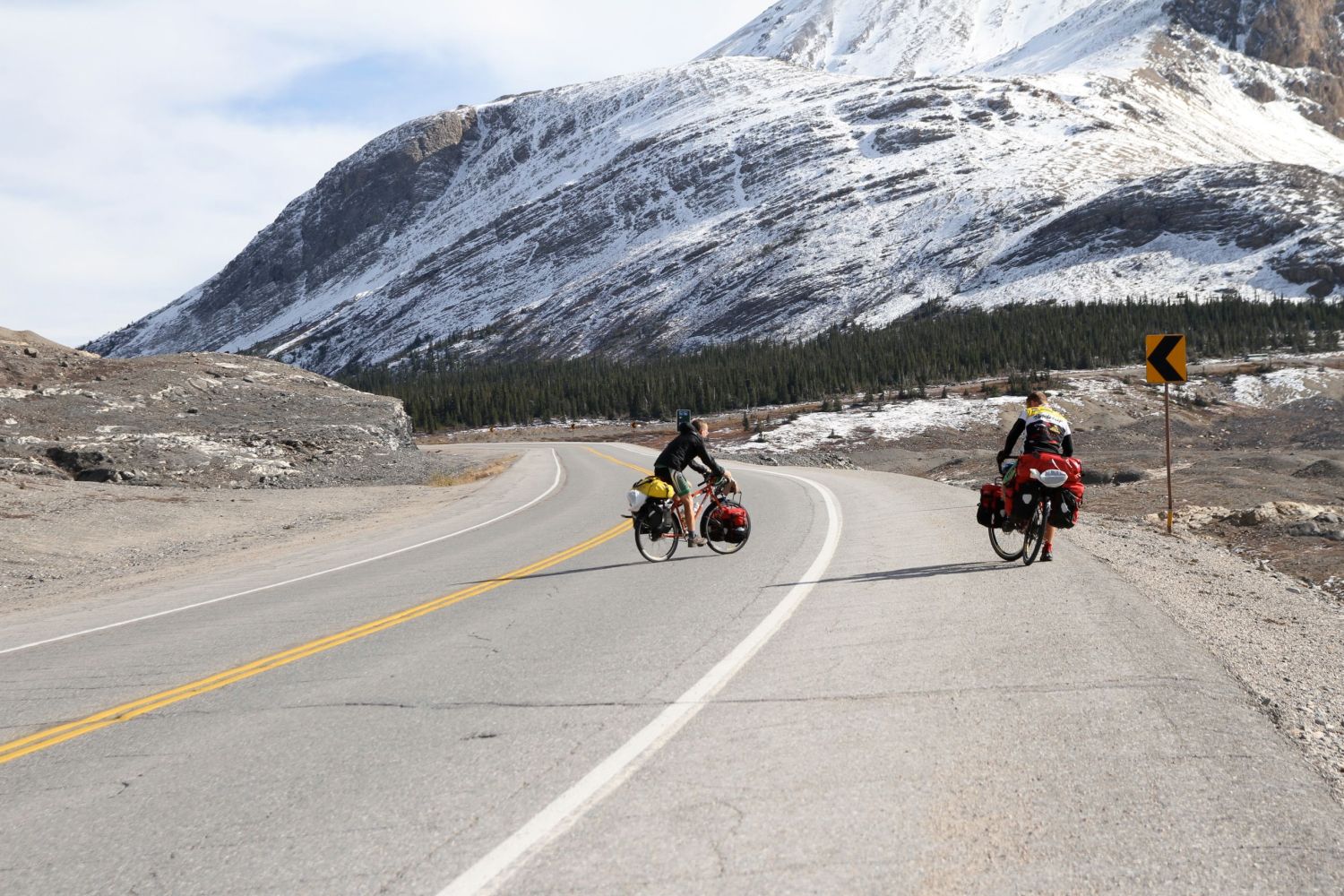
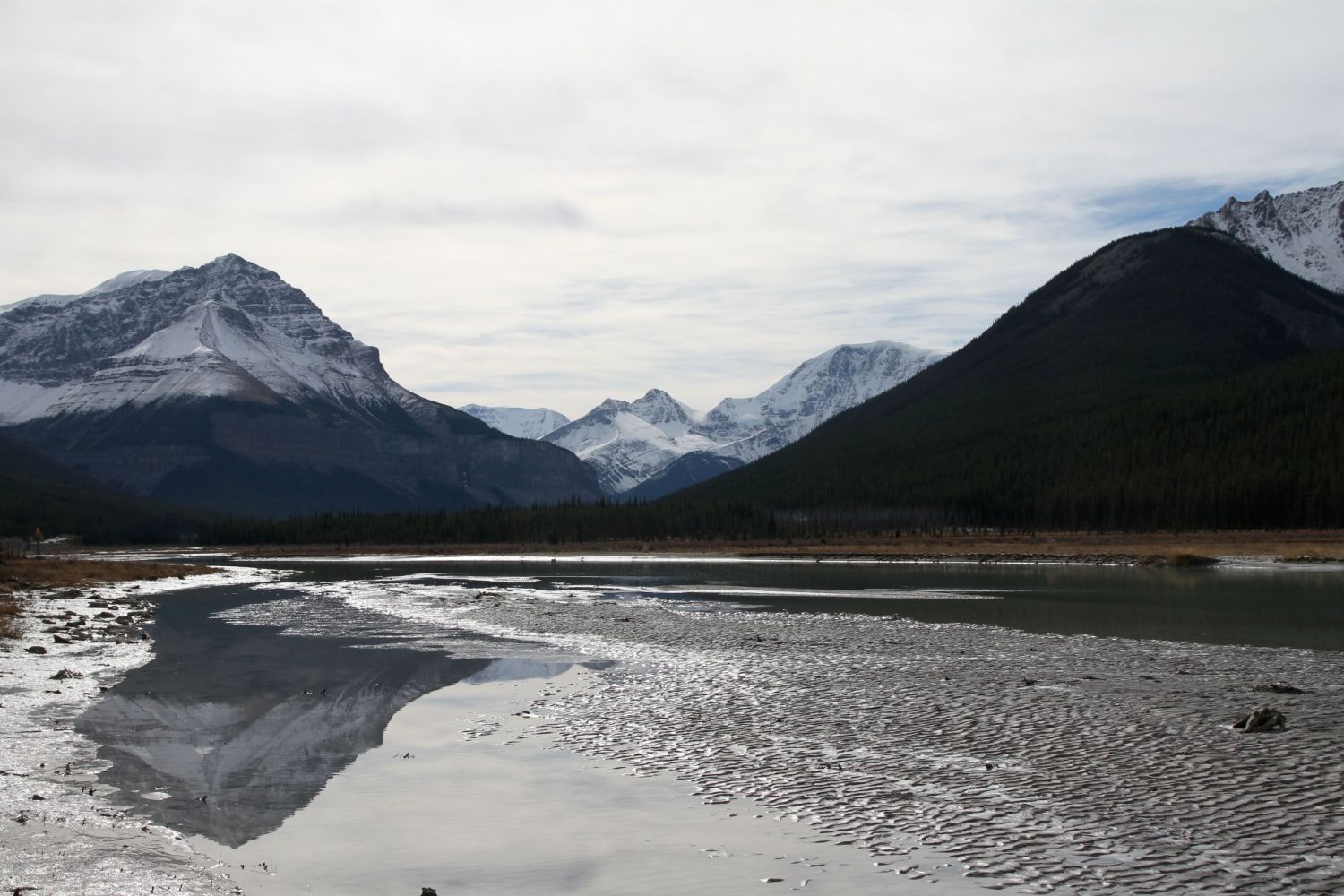
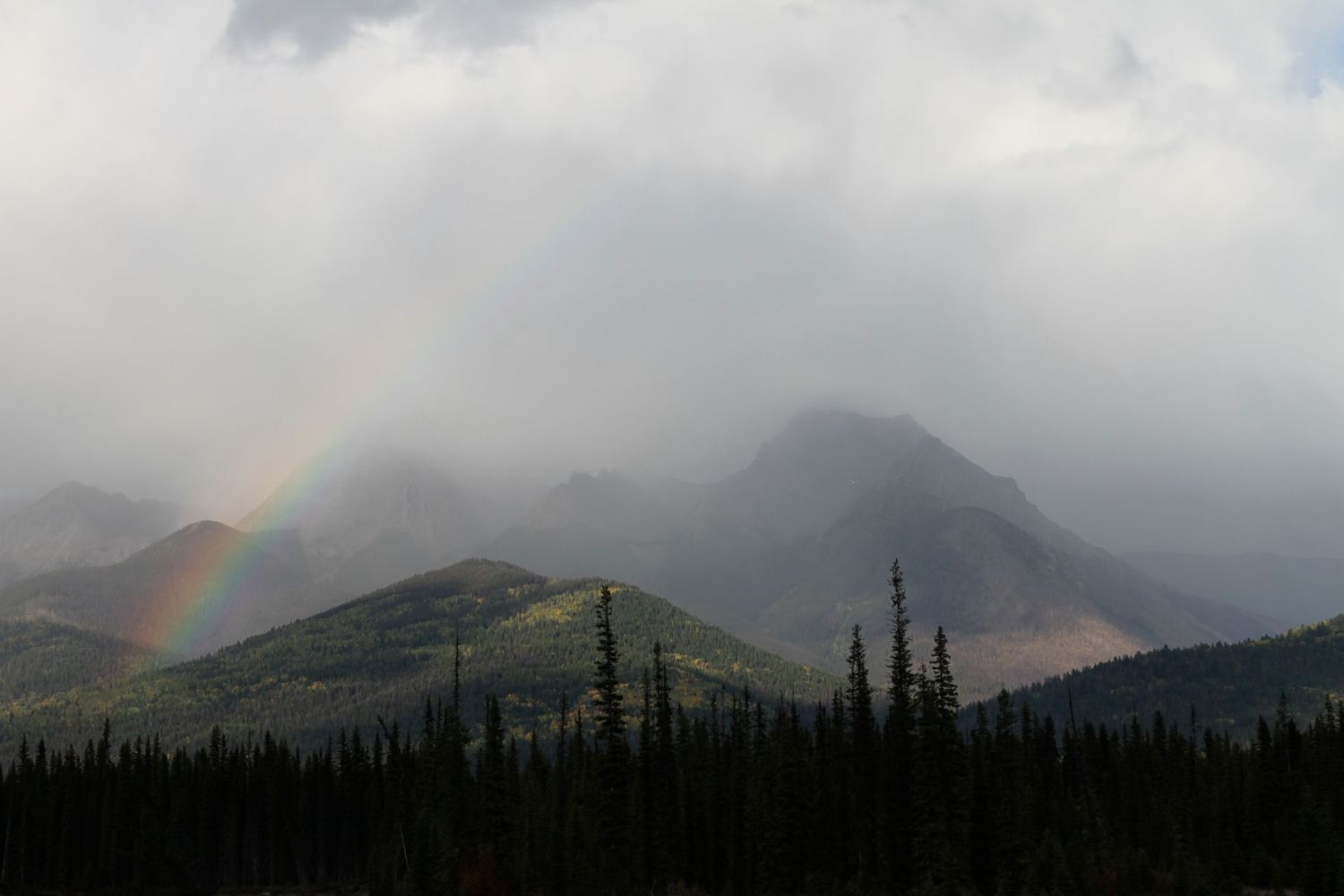
Walking around like crippled men, unable to descend a set of stairs without crying, the three of us pressed on from Jasper to ride the Icefields Parkway.  I don’t wish to impoverish the beauty of these Canadian Rockies by attempting to describe them.  I’ll let the pictures do the talking.  Life on the road was memorable to say the least.  We found ourselves camping in campgrounds that were shut for the winter, tenting in open shelters and braving subzero temperatures at night.  With a three-season-tent and a decent supply of cold weather gear, we were never in danger; though we did wear everything we had in order to stay warm in our tent through the night.  I am looking forward to (hopefully) warmer temperatures in the States.

Unforgettable cold crosswinds on Sunwapta Pass.

The Icefields brought us some of our highest climbs of the trip, with Bow Pass and the Columbia Icefield taking us up to nearly 7,000 feet of elevation.  Remarkably, that was within 500 feet of the summit of our Whistlers hike, which gives you some perspective as to how much we climbed.  The Icefields also acquainted us with 40mph crosswinds like we had never seen before.  With our bikes fully loaded they behave like heavy sails.  This is no exaggeration: we climbed the last segment of Sunwapta Pass with our bikes leaned over more than 45 degrees into the wind to avoid being blown across the road and into traffic.  We will probably meet crosswinds like this again in Patagonia, and luckily we have plenty of time between now and then.

The Icefields were cold but worthwhile.

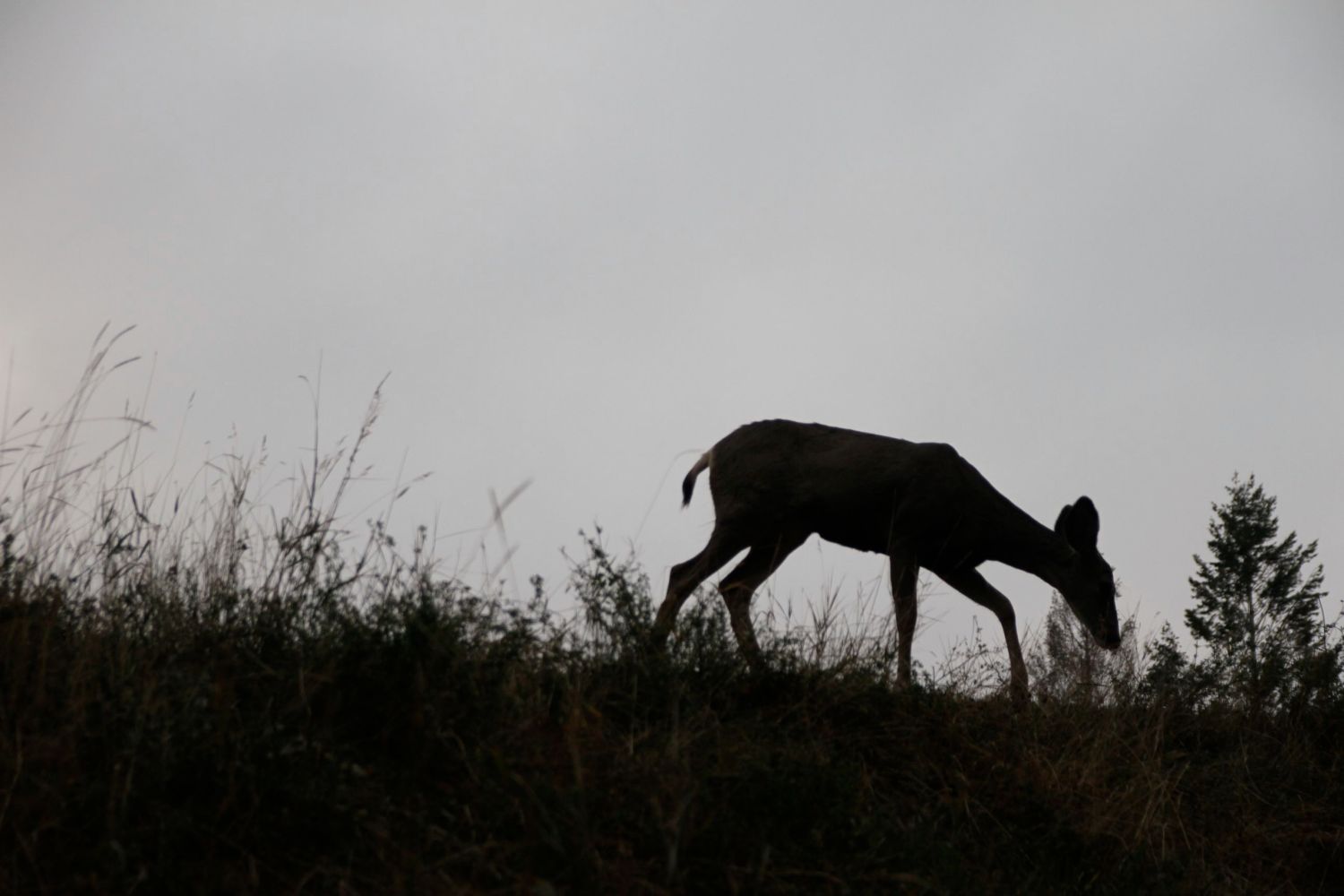
The road since the Icefields has not disappointed, either.  Lake Louise brought us rest and an unexpected home stay with some housekeepers.  The road into Radium brought us some spectacular climbs and descents, including some hairy encounters with mountain goats at 45 mph on the winding descent through mountain roads flanked by cliffs on all sides.  And what would tent camping be without being greeted by deer in the morning?

One of our morning visitors.

We might get wet and cold and discouraged at different points of the ride.  Yet we believe in ourselves.  Deep down, we buy into this “bicycle cowboy” thing.  We have paid our dues, climbed our mountains, and watched our bodies change and adapt even in the short six weeks since we left Alaska.  We ride knowing we’re up to the task at hand, even if it means we’re shattered by the time we finish riding by the light of our headlamps barely find the strength to sit down to a home stay and a heaping bowl of spaghetti.

America the Beautiful beckons to us already.  As Kerouac writes, “Nothing behind me, everything ahead of me, as is ever so on the road.”

Reward after a long, cold, and rainy descent.

Brothers

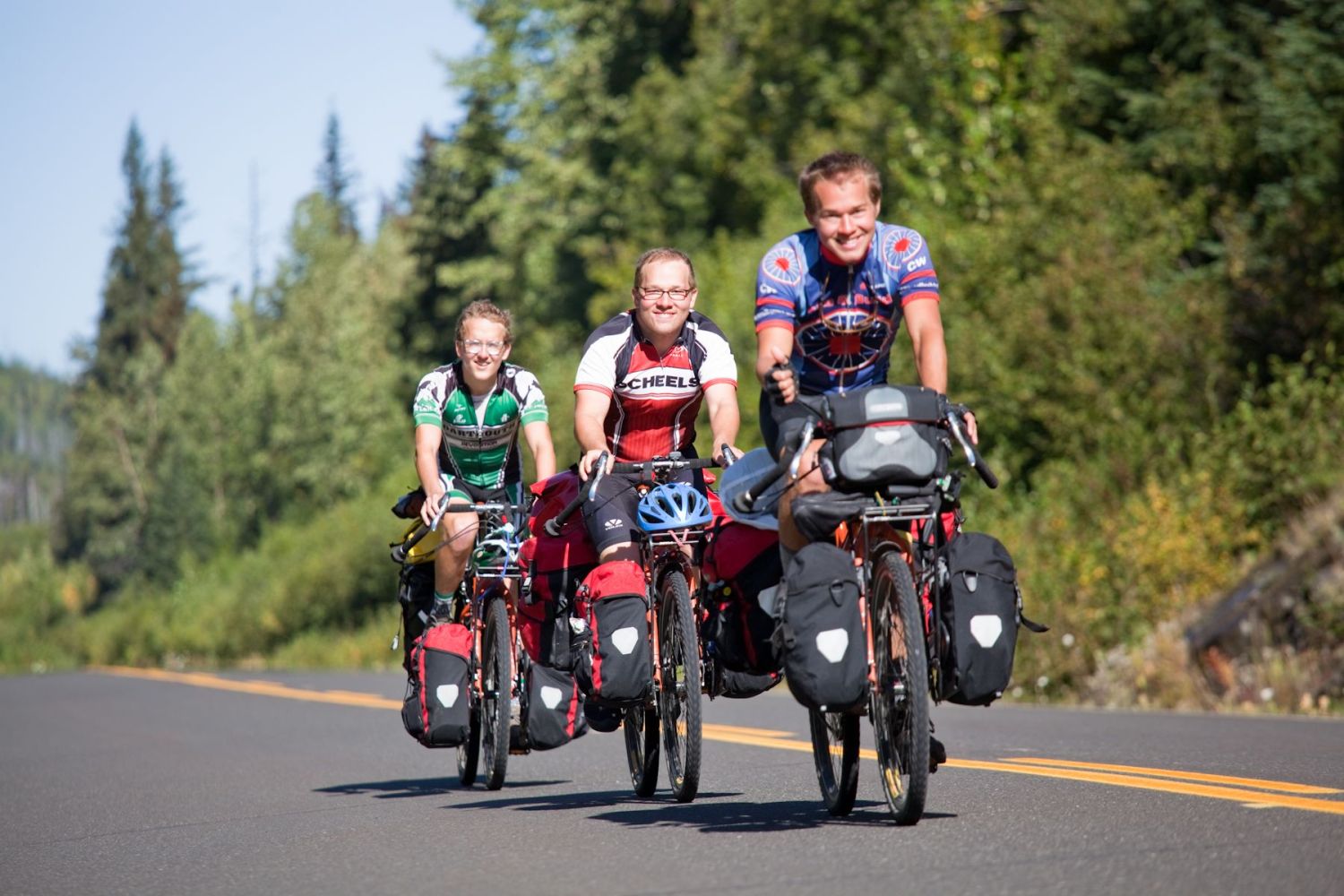
The first thing that people notice on our business cards is the tagline for Bound South: Three Brother’s Expedition from Alaska to Argentina.  Immediately they gaze in awe at the three of us.  However, it is not the 30,000 kilometers separating Alaska and Argentina that shocks them.  It’s the fact that we’re doing this with one another as brothers.

Taking a rest day in Jasper, hiking 3000 ft. of vertical.

“You three must get along pretty well, huh?”  No, I like to say that we hit rock bottom somewhere in the mid ’90s.  Our parents may attest to this.  The tipping point was the winter of 1997.  Nathan and I buried David up to his head in the mountain of snow on the edge of our farmstead and convinced him that we had left him there to die in the imminent blizzard.  Good times.  Since this relationship is incapable of further deterioration, I figured that my brothers were a safe bet for a year-long bicycle expedition.  Blood is thicker than water.  On this trip we have discovered that blood is also thicker than sweat, Gatorade, Tang, and the delicious jelly filled with glass shards that I recommended to David in Alaska.  “Countercultural” might be an epithet in our home state, but I think we fit the definition pretty well.  I don’t know how many siblings would voluntarily choose this path that we’ve taken.

On some level, I think that fact is a small tragedy of modern America.  America reaps the fruits of individualism, mobility, and pluralism.  You can be who you want to be and escape the traditional confines of your family or region to find your community, whether in the real world or in cyberspace.  When relationships suffer, it is far too easy to withdraw, escape, and move to an environment with less friction.  Society can freely atomize and self-sort into stagnation.

The Heisman

Yet perhaps this is just mild self-aggrandizement.  The three of us are lucky to have brotherhood and friendship that is more than duty or obligation.  I attribute this blessing to the years we have spent working together on our family farm in Starkweather, ND.  Occasionally, we were jealous of our peers with their summers of liberty and we resented the family farm for it.  We look back now and wouldn’t trade it for anything.  When you have work together and live together, inseparable from planting to harvest, you can’t walk away from your problems and you have to learn to love one another.  We have strong family bonds to show for it.  There is a powerful, sustaining magic in kinship of which we have only begun to scratch the surface.  I hope that this magic can be made evident here at Bound South and perhaps rediscovered in the lives of our readers.

Mind, Body, and Machine

Shattered.  Any cyclist could tell you that the adjective isn’t all about glass.  There may be other sports that share cycling’s terminology of physical and mental exhaustion, that understand suffering that would “ennoble the muscles” as Henri Desgrange put it when he founded the Tour de France.   There is something profound about the bicycle: if your running shoes tried to draw as much sheer effort as a bicycle can, you would simply fall over.  Suspended by a bicycle saddle, the immolation of your legs can always be arranged to leave you breathing, moving, yet completely shattered by day’s end.

I was steeped in a culture of road cycling since I started college, cutting my teeth on collegiate racing and the four seasons of Vermont dirt roads and New Hampshire mountains.  Occasional sacrilege had put me on a mountain bike during my years at Dartmouth but my heart was always with road and cyclocross racing bikes.  I was never a phenomenal competitor, mind you.  I rode well and hard and knew The Rules and the art of a group ride. I loved the sport and racing with all my heart despite my lackluster results.

No matter how strong you are, cycling humbles you.  There is always someone faster or a ride that is harder.  I’ve eaten my fair share of humble pie, my last serving being an epic 150 miles through New Hampshire.  Hubris suggested that this Alaska to Argentina thing wouldn’t be that big of a deal.  We’ve got most of the day to go our average 110k, meet new people, take photos, eat 5,000 calories, and set up our tent.  The third day of our journey was a very hard hundred miles in the mountains to Cantwell, AK that we began at noon.  We got it done in a little over ten hours.  Barely.

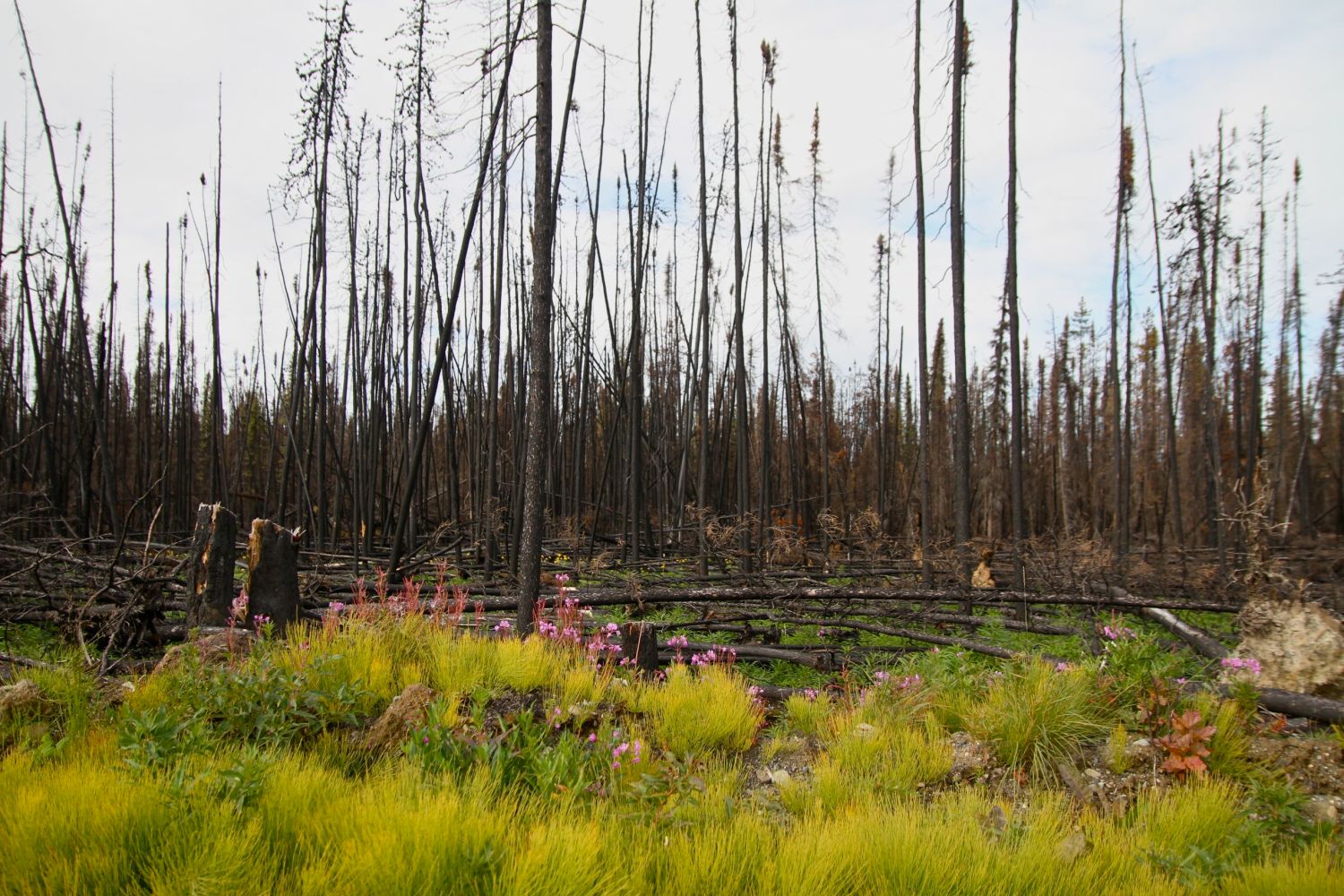
New life springs from below the burned forest

I knew this journey wasn’t going to be easy.  Deep down, I didn’t think it would be quite this hard.  Pushing heavy bikes through the wind and up hills is an exercise in constant mental toughness.  We are getting stronger every day.  Yesterday we had our first true tailwind of the trip with southwest winds helping us along to Vanderhoof, BC.  It was spectacular.  The three of us flew past farm country and pasturelands at speeds that rivaled a spirited road ride on skinny tires and race bikes.  A humming paceline is music for the soul.  It almost made up for the day before, a grueling ride of 150k to Fraser Lake that proved the inverse rule correct: once you leave the spectacular scenery of the mountains, endless rolling hills and winds conspire against you.  We had done longer and harder days already, but there was something profound about that ride in particular.  I felt beaten, even if I finished the ride like any other.

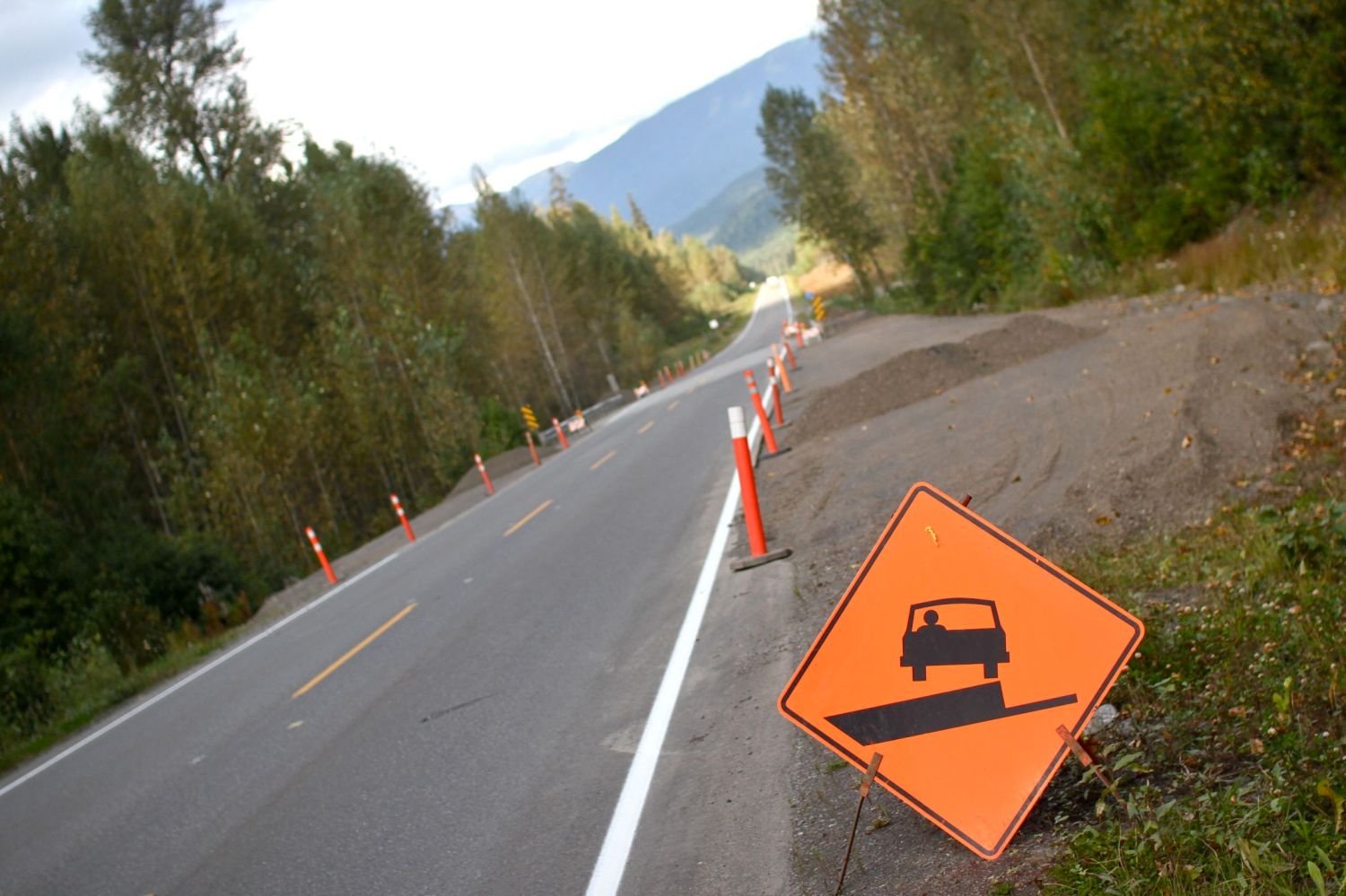
We love Canadian signs.

The intensity of that feeling subsided once we were taken in by an older couple who stuffed us with spaghetti that night and huckleberry pancakes the next morning.  Yet the feeling of that cruel brush against my limits still lingers and reminds me somewhat of human nature.  We would rather eschew the cold rain, the long climbs, the achy legs, the doubt and the mental stress of life on the road because it brings us uncomfortably close to the limits of our own mortality and nature.  Yet only by facing those austere limits can we appreciate the vast expanses of the little worlds between Alaska and Argentina.  There are corollaries in faith and love and family and life.  If we take the time to listen, there is much to learn on the road south.

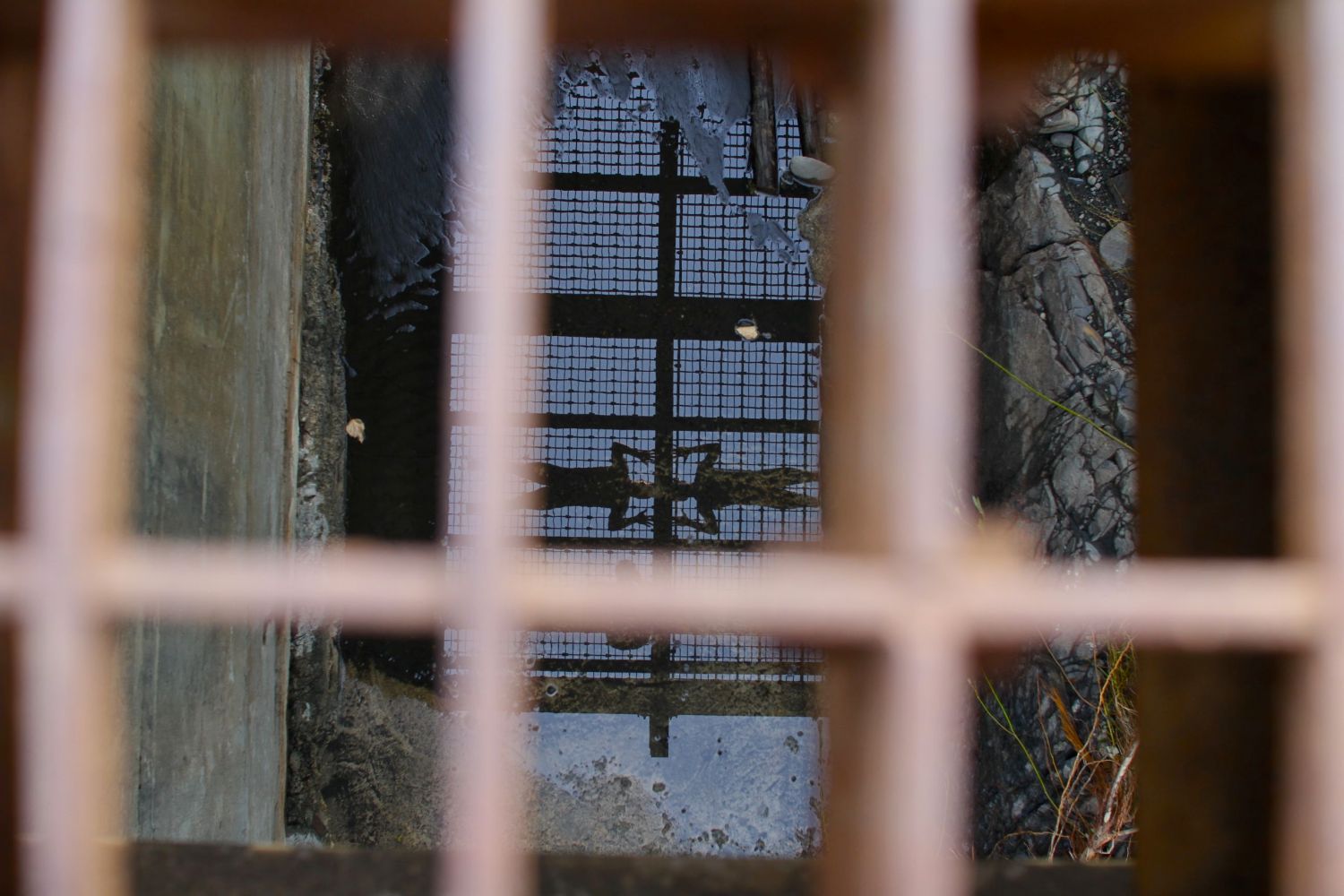
Looking down through the Barrage Bridge